Book a tutor

The lifecycle of a virus

Health, disease and the development of medicines · Pathogens and infections · note 4 of 5

Spec 5.7B
Triple only (what this means)Triple only: only in Triple Biology. Combined Science students can skip it. What the labels mean
Download all Pathogens and infections notes (PDF)Download all notes (PDF)6 pages

The lifecycle of a virusSpec 5.7B

In short

A virus can only reproduce inside a host cell, by the lytic or the lysogenic pathway. In the lytic pathway, the viral genetic material takes over the cell, new viruses are assembled and the cell bursts. In the lysogenic pathway, the viral genetic material joins the host DNA and stays dormant until it is triggered to become active.

Viruses are not cells and cannot reproduce on their own. They reproduce inside a host cell, using the host's cell machinery. A virus can follow one of two pathways.

The lytic pathway

  1. The virus attaches to a host cell and its genetic material enters the cell.
  2. The viral genetic material takes over the host cell and the cell makes new virus parts.
  3. New viruses are assembled inside the cell.
  4. The cell bursts open (it is lysed) and the new viruses are released to infect other cells.

The lysogenic pathway

  1. The virus attaches and its genetic material enters the host cell.
  2. The viral genetic material becomes part of the host cell's DNA.
  3. The virus stays dormant (inactive). The host cell does not burst and does not show harm. When the host cell divides, the viral genetic material is copied too, so every new cell contains it.
  4. At a later time, something may trigger the viral genetic material to become active, and the virus then follows the lytic pathway.
Lytic and lysogenic pathways compared
LyticLysogenic
Viral genetic materialTakes over the cell straight awayJoins the host DNA and stays inactive
New viruses made?Yes, immediatelyNot until the virus becomes active
Host cellBurst open and killedSurvives and divides, copying the viral genes
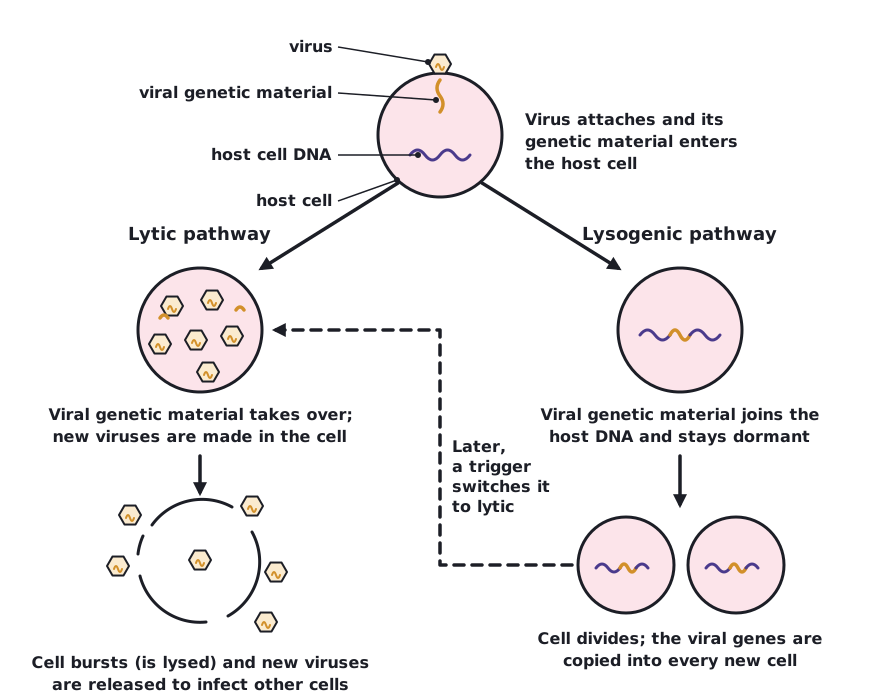
Diagram of a virus attaching to a host cell and injecting its genetic material, then the lytic pathway (new viruses made, cell bursts and releases them) and the lysogenic pathway (viral genetic material joins host DNA, cell divides copying it, and a later trigger switches it to the lytic pathway). (opens full size in a new tab)
Lytic: new viruses are made and the cell bursts. Lysogenic: viral genes hide in the host DNA until a trigger makes them active.

Written and checked against the Edexcel GCSE Biology (1BI0) specification · Updated October 2026

Frequently asked questions

How do pathogens spread?

Pathogens spread in several ways: in contaminated water, like cholera; through the air in droplets or spores, like tuberculosis and Chalara ash dieback; by an animal vector, like the mosquito carrying malaria; and by sexual contact, like chlamydia and HIV. To reduce the spread, identify the route and then block it.

What is the difference between bacteria and viruses?

Bacteria are single-celled organisms with no nucleus, while viruses are not cells at all. Viruses are much smaller than bacteria and can only reproduce inside a host cell. Examples are the cholera bacterium and HIV. This is why antibiotics, which inhibit cell processes in bacteria, do not work on viruses.

How can the spread of malaria be reduced?

The spread of malaria can be reduced by controlling its vector, the mosquito, which carries the malaria protist from person to person. Draining standing water and using insecticides kill mosquitoes, while mosquito nets and insect repellent stop people being bitten. Mosquitoes do not cause malaria; the protist does.

All 5 questions on Pathogens and infections