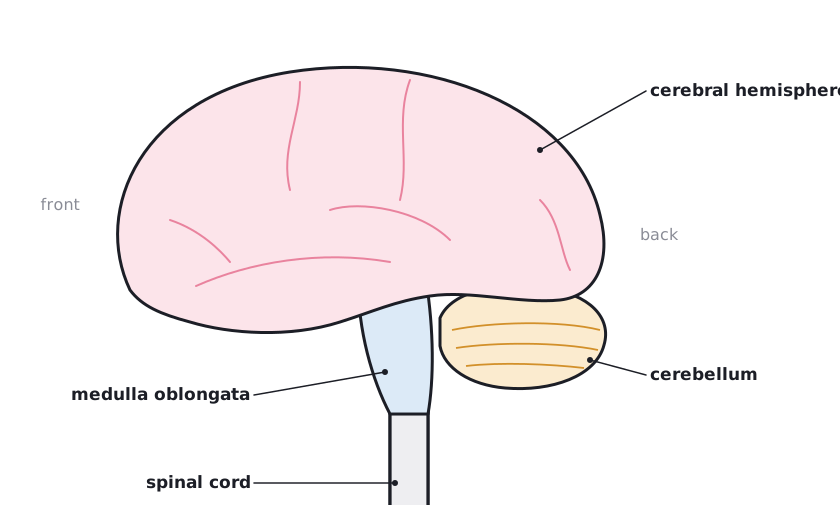
The brain is part of the central nervous system, and each region has a different function. The cerebral hemispheres are involved in conscious thought, intelligence, memory and language. The cerebellum coordinates movement and helps to control balance. The medulla oblongata controls unconscious activities, such as heart rate and breathing rate.
The brain is part of the central nervous system. Different regions have different functions.
Regions of the brain
Region
Function
Cerebral hemispheres
The left and right halves of the largest part of the brain. They are involved in conscious thought, intelligence, memory and language.
Cerebellum
Coordinates movement and helps to control balance.
Medulla oblongata
Controls unconscious activities, such as heart rate and breathing rate.
Learn one function for each region. The medulla oblongata controls the activities you do not think about.
Written and checked against the Edexcel GCSE Biology (1BI0) specification · Updated October 2026
Frequently asked questions
What are the main parts of the brain and their functions?
The main parts of the brain are the cerebral hemispheres, cerebellum and medulla oblongata. The cerebral hemispheres are involved in conscious thought, intelligence, memory and language. The cerebellum coordinates movement and helps to control balance. The medulla oblongata controls unconscious activities, such as heart rate and breathing rate.
What is the difference between a CT scan and a PET scan?
Higher tier A CT scan uses X-rays taken from many angles to build up images of the brain's structure, so it can reveal damage or a tumour. A PET scan uses a radioactive tracer, which active areas of the brain use more of, so it shows brain function. Both investigate the brain without surgery.
Why is it difficult to treat damage to the nervous system?
Higher tier It is difficult because the brain is complex and delicate, and hard to reach inside the skull, so surgery risks damaging healthy tissue. Neurones in the central nervous system do not easily repair themselves, so damage is often permanent. A spinal injury can cause paralysis, and some brain tumours cannot be removed safely.

 (opens full size in a new tab)