
Book a tutor

Protein synthesis: transcription and translation

Genetics · Protein synthesis and gene variants · note 2 of 4

Spec 3.8B
Triple only (what this means)Triple only: only in Triple Biology. Combined Science students can skip it. What the labels mean
Higher tier (what this means)Higher tier: only on the Higher tier papers. Foundation students can skip it. What the labels mean
Download all Protein synthesis and gene variants notes (PDF)Download all notes (PDF)4 pages

Protein synthesis: transcription and translationSpec 3.8B

In short

Protein synthesis has two stages. In transcription, in the nucleus, RNA polymerase binds to non-coding DNA in front of a gene and makes a complementary mRNA strand. In translation, the mRNA attaches to a ribosome and is read in codons, triplets of bases. tRNA brings the matching amino acids, which are linked to form a polypeptide.

Protein synthesis has two main stages. In transcription, a copy of the gene is made as a strand of mRNA. In translation, the mRNA is used to build a polypeptide at a ribosome.

Transcription (in the nucleus)

  1. RNA polymerase binds to the non-coding DNA located in front of a gene.
  2. RNA polymerase produces a complementary mRNA strand from the coding DNA of the gene.
  3. The mRNA moves out of the nucleus into the cytoplasm.

Translation (at a ribosome)

  1. The mRNA attaches to a ribosome.
  2. The mRNA is read in triplets of bases called codons. Each codon codes for a specific amino acid.
  3. tRNA molecules transfer amino acids to the ribosome. Each tRNA carries the amino acid that matches a codon on the mRNA.
  4. The amino acids are linked together to form a polypeptide, which folds into a protein.
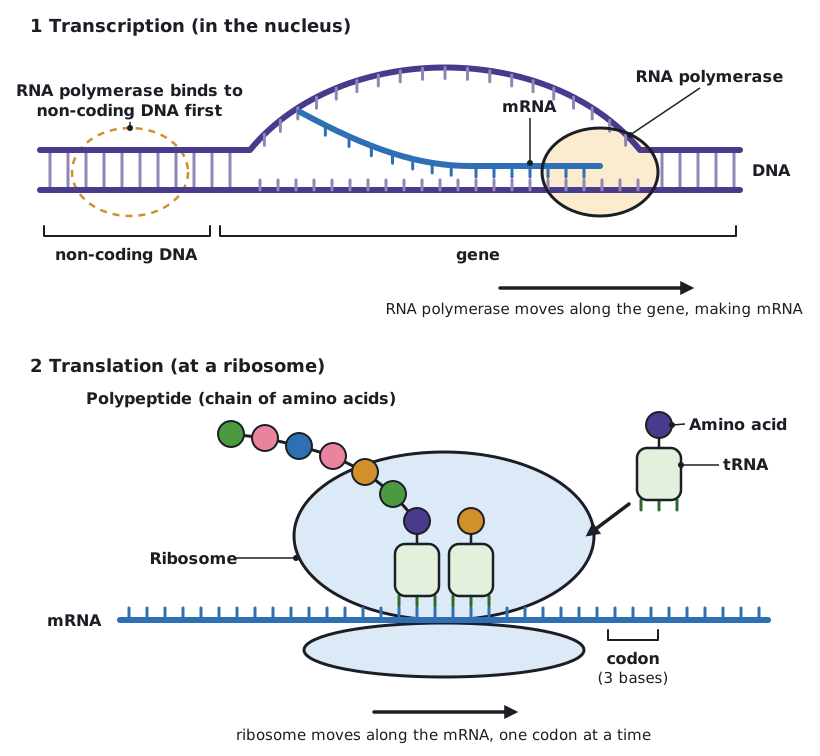
Top: RNA polymerase, which first binds to non-coding DNA in front of the gene, moves along the gene making a complementary mRNA strand. Bottom: mRNA on a ribosome, read in codons of 3 bases, with tRNA molecules bringing amino acids that join to form a polypeptide. (opens full size in a new tab)
Transcription makes mRNA from DNA; translation makes a polypeptide from mRNA at a ribosome.
Common mistake:

Do not mix up the two stages. Transcription makes mRNA from DNA. Translation makes a polypeptide from mRNA.

Written and checked against the Edexcel GCSE Biology (1BI0) specification · Updated October 2026

Frequently asked questions

What happens in transcription and translation?

In transcription, in the nucleus, RNA polymerase makes a complementary mRNA copy of a gene, and the mRNA moves out into the cytoplasm. In translation, the mRNA attaches to a ribosome and is read in codons. tRNA molecules bring the matching amino acids, which are linked together to form a polypeptide.

How does the order of bases determine a protein's shape?

The order of bases in a gene decides the order of amino acids in the protein. The amino acid chain then folds in a way that depends on that order, which gives the protein its specific shape. A different order of bases could give a differently folded protein that cannot do the same job.

How can a mutation change a protein?

A genetic variant in the coding DNA of a gene can change the sequence of amino acids in the protein. The polypeptide may then fold into a different shape, so its activity changes. For example, the active site of an enzyme may no longer fit its substrate, and this change can affect the phenotype.

All 4 questions on Protein synthesis and gene variants