
MeiosisSpec 3.3
In short
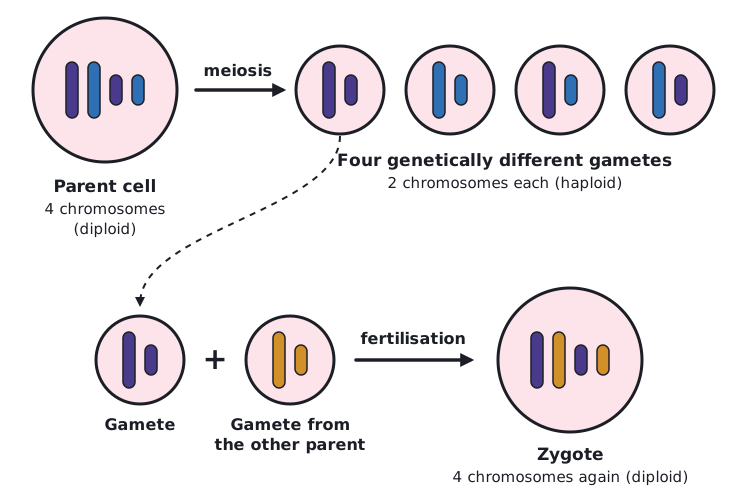
Meiosis is the type of cell division that makes gametes. One parent cell divides to produce four daughter cells, each with half the number of chromosomes, which are genetically different from each other and from the parent cell. In humans, meiosis makes sperm and egg cells with 23 chromosomes, and fertilisation restores the full 46.
Meiotic cell division (meiosis) is the type of cell division that makes gametes. In humans it happens in the reproductive organs.
- One parent cell divides to produce four daughter cells.
- Each daughter cell has half the number of chromosomes of the parent cell.
- The daughter cells are genetically different from each other and from the parent cell.
- The daughter cells are haploid gametes, with one set of chromosomes.
A human body cell has 46 chromosomes. Meiosis makes sperm and egg cells with 23 chromosomes each. At fertilisation the two gametes fuse and the zygote has 46 chromosomes again, with half from each parent.
| Body cell (diploid) | Gamete (haploid) | |
|---|---|---|
| Chromosomes in a human cell | 46 | 23 |
| Genetically identical to the others? | Yes, if made by mitosis | No, each gamete is different |
| Made by | Mitosis | Meiosis |
 (opens full size in a new tab)
The stages of meiosis are not required. Learn the outcome: four genetically different haploid gametes, each with half the number of chromosomes.
Quick check
Give one advantage and one disadvantage of asexual reproduction.
Show answer
Advantage: no need to find a mate (or rapid reproductive cycle). Disadvantage: no variation in the population.
Give one advantage and one disadvantage of sexual reproduction.
Show answer
Advantage: variation in the population. Disadvantage: the requirement to find a mate.
How many daughter cells does one meiotic division produce?
Show answer
Four.
How many chromosomes are in a human gamete?
Show answer
23, which is half the number in a body cell (46).
Written and checked against the Edexcel GCSE Biology (1BI0) specification · Updated October 2026