
Structure and function of the eyeSpec 2.15B
In short
The eye is a sensory receptor organ that detects light. The cornea and lens refract light to focus it on the retina, which contains rod and cone cells. Rod cells work in dim light, and cone cells detect colour in bright light. The iris changes the size of the pupil to control how much light enters the eye.
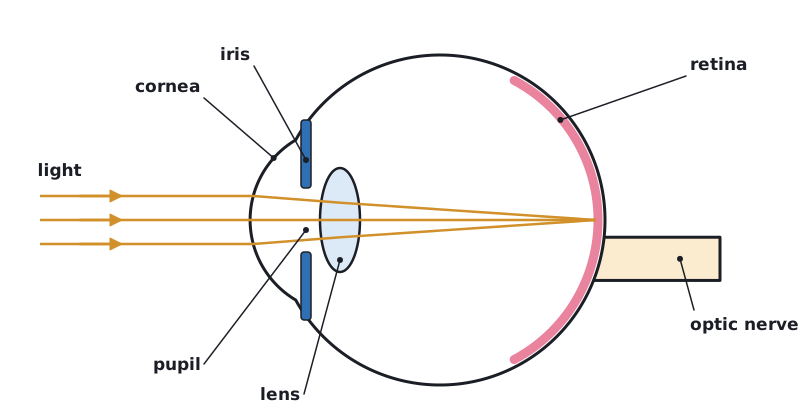
The eye is a sensory receptor organ that detects light. Light is refracted (bent) so that it is focused on the retina, which contains the receptor cells.
| Part | Function |
|---|---|
| Cornea | Refracts (bends) light as it enters the eye |
| Lens | Refracts light to focus it on the retina |
| Iris | Changes the size of the pupil, so controls how much light enters the eye |
| Rod cells | Sensitive to dim light. They do not detect colour |
| Cone cells | Detect colour and work in bright light |
| Retina | Contains the rod and cone cells. Impulses go to the brain along the optic nerve |
The iris
The iris is the coloured ring of muscle around the pupil. Its muscles change the size of the pupil. In bright light the pupil gets smaller, so less light enters and the retina is protected from damage. In dim light the pupil gets larger, so more light enters and you can see better.
Rods and cones
Rod cells work in dim light but only give black and white vision. There are three types of cone cell, sensitive to red, green or blue light. Together they give colour vision. Cones need brighter light.
 (opens full size in a new tab)
Written and checked against the Edexcel GCSE Biology (1BI0) specification · Updated October 2026