
TranslocationSpec 6.10
In short
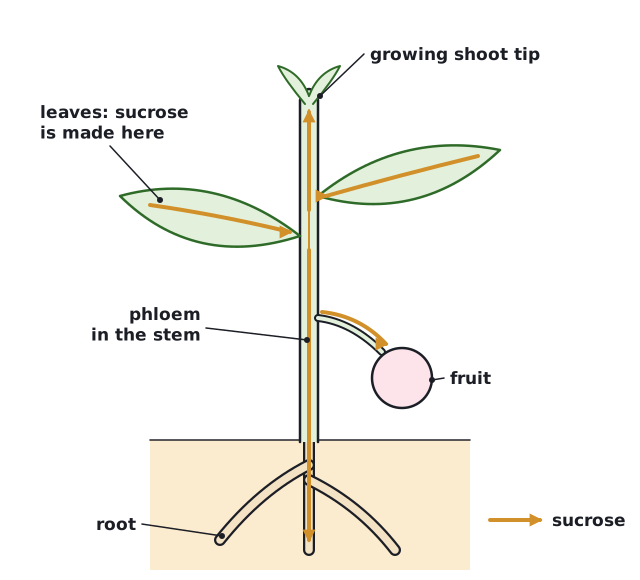
Translocation is the transport of sucrose around the plant, dissolved in water in the phloem. Sucrose moves from the leaves, where it is made, to parts that use or store it, such as growing shoot tips, roots, flowers and fruits. It can move up or down, and needs energy released by respiration in the living phloem cells.
Translocation is the transport of sucrose around the plant. Sucrose is made from the glucose produced in photosynthesis, and it is carried dissolved in water in the phloem.
- Sucrose moves from the leaves, where it is made, to the parts of the plant that use it or store it, such as growing shoot tips, roots, flowers and fruits.
- It can move up and down the plant, depending on where it is needed.
- Translocation needs energy, which is released by respiration in the living cells of the phloem.
 (opens full size in a new tab)
Contrast it with transpiration: translocation moves sucrose in the phloem and uses energy. Transpiration moves water in the xylem and does not use energy from the plant's cells.
Quick check
Give two adaptations of a root hair cell.
Show answer
Any two of: a long, thin projection for a large surface area; many mitochondria for active transport; a thin cell wall.
Why is xylem made of lignified dead cells?
Show answer
Dead cells with no end walls form a continuous hollow tube for water, and lignin strengthens the walls.
What is transpiration?
Show answer
The loss of water vapour from the leaves, which pulls water through the plant.
What is translocation?
Show answer
The transport of sucrose around the plant in the phloem.
Written and checked against the Edexcel GCSE Biology (1BI0) specification · Updated October 2026