
The nitrogen cycleSpec 9.15
In short
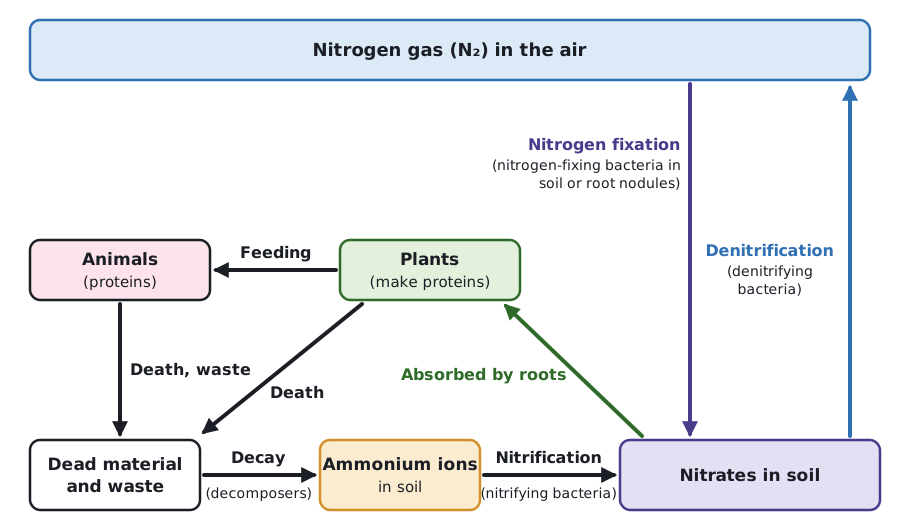
The nitrogen cycle makes nitrates available to plants, which need them to make amino acids and proteins. Decomposers turn proteins and urea into ammonia, nitrifying bacteria convert ammonium ions into nitrates, and nitrogen-fixing bacteria turn nitrogen gas into nitrogen compounds. Denitrifying bacteria turn nitrates back into nitrogen gas. Farmers add fertilisers or use crop rotation.
Plants need nitrates from the soil to make amino acids and proteins. Although 78% of air is nitrogen gas, plants cannot use it directly. Bacteria in the soil have key roles in making nitrates available.
| Process | Bacteria | What happens |
|---|---|---|
| Decay | Decomposers (bacteria and fungi) | Break down proteins and urea in dead material and waste into ammonia (ammonium ions) |
| Nitrification | Nitrifying bacteria | Convert ammonium ions in the soil into nitrates, which plants absorb |
| Nitrogen fixation | Nitrogen-fixing bacteria, in the soil or in root nodules of legumes | Convert nitrogen gas from the air into nitrogen compounds, which become nitrates |
| Denitrification | Denitrifying bacteria | Convert nitrates in the soil into nitrogen gas, which reduces soil fertility |
Plants take up nitrates and build them into proteins. Animals get the nitrogen by eating plants or other animals.
Fertilisers and crop rotation
Farmers remove crops, so nitrates are lost from the soil. They can replace them in two ways:
- Fertilisers: add nitrates (and other minerals) to the soil.
- Crop rotation: different crops are grown in a field in different years. In some years a legume crop such as clover or peas is grown. Its root nodules contain nitrogen-fixing bacteria, and when its remains are ploughed into the soil they add nitrates. It is then followed by a crop that needs a lot of nitrates.
Nitrogen-fixing bacteria are not the bacteria that make ammonia from dead material. That is decay. Fixing means turning nitrogen gas into compounds.
 (opens full size in a new tab)
Quick check
Which process removes carbon dioxide from the air?
Show answer
Photosynthesis.
What is potable water?
Show answer
Water that is safe to drink.
Why do plants need nitrates?
Show answer
To make amino acids and proteins.
Which bacteria are found in the root nodules of legumes?
Show answer
Nitrogen-fixing bacteria.
Why are decomposers important in the carbon cycle?
Show answer
They break down dead material and release carbon dioxide by respiration.
Written and checked against the Edexcel GCSE Biology (1BI0) specification · Updated October 2026