
Plants in extreme environmentsSpec 6.14B
In short
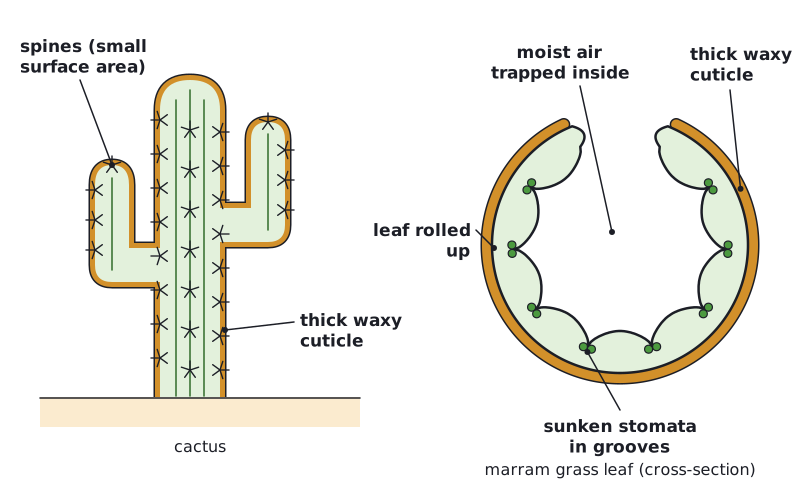
Plants in extreme environments, which are hot, dry or windy, have adaptations that reduce water loss by transpiration. They may have small, needle-like or rolled leaves or spines, a thick waxy cuticle, and fewer or sunken stomata. The cost is that less carbon dioxide enters, so these plants often photosynthesise and grow slowly.
Plants that live in hot, dry or windy places lose water very easily. They have adaptations that reduce water loss by transpiration. These adaptations affect leaf size and shape, the cuticle and the stomata.
| Feature | Adaptation | How it helps |
|---|---|---|
| Leaf size and shape | Small, narrow or needle-like leaves, spines (as in a cactus), or leaves that roll up (as in marram grass) | A smaller surface area means less water evaporates. Rolled leaves trap moist air around the stomata. |
| Cuticle | A thick, waxy cuticle | Waterproof, so less water evaporates through the leaf surface |
| Stomata | Fewer stomata, or stomata sunk in pits, or stomata that are closed during the day | Less water vapour diffuses out. In sunken stomata, moist air is trapped in the pit, which reduces the concentration gradient. |
These adaptations come at a cost. With less leaf area and fewer or closed stomata, less carbon dioxide can enter the plant, so these plants often photosynthesise and grow slowly.
 (opens full size in a new tab)
Link each adaptation to water loss. For example, 'spines instead of leaves give a small surface area, so less water is lost by evaporation'.
Quick check
What does a potometer measure?
Show answer
The rate of water uptake of a leafy shoot.
Why does moving air increase the rate of transpiration?
Show answer
It carries away water vapour, keeping a steep concentration gradient so water vapour diffuses out faster.
A bubble in a potometer moves 24 mm in 8 minutes. What is the rate?
Show answer
24 ÷ 8 = 3 mm per minute.
Why does a higher temperature increase the rate of water uptake?
Show answer
Water evaporates from the leaf cells faster and water vapour diffuses out faster, so more water is pulled up the xylem.
Written and checked against the Edexcel GCSE Biology (1BI0) specification · Updated October 2026