
The nephron: filtering and reabsorptionSpec 7.19B
In short
A nephron is a tiny tube in the kidney that filters the blood and forms urine. At the glomerulus, high pressure forces small molecules such as water, glucose, urea and ions into the Bowman's capsule. All the glucose is then reabsorbed by active transport, and water is reabsorbed along the loop of Henle and collecting duct.
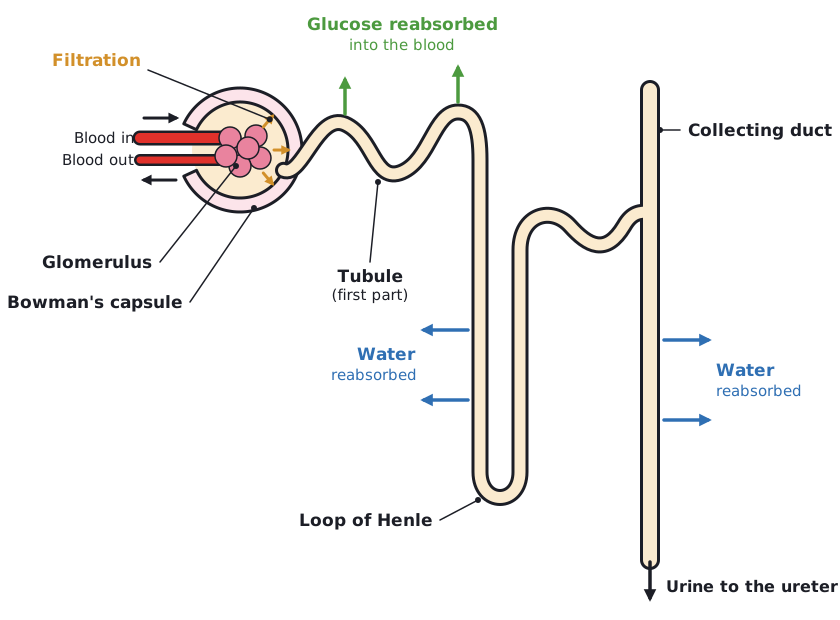
Each kidney contains many tiny tubes called nephrons. The nephron filters the blood and forms urine. Blood enters a knot of capillaries, the glomerulus, which sits inside a cup-shaped Bowman's capsule.
- Filtration: blood in the glomerulus is at high pressure. Small molecules such as water, glucose, urea and ions are forced out into the Bowman's capsule. Large molecules such as proteins, and blood cells, stay in the blood.
- Selective reabsorption of glucose: in the first part of the tubule, all the glucose is reabsorbed back into the blood by active transport, which uses energy from respiration.
- Reabsorption of water: as the filtrate passes along the loop of Henle and the collecting duct, water is reabsorbed back into the blood. How much depends on the body's needs.
- What is left, which is urea, excess ions and water, is urine. It passes to the ureter.
| Substance | Filtered at the glomerulus? | In urine? |
|---|---|---|
| Water | Yes | Yes, the amount that is not reabsorbed |
| Glucose | Yes | No, all reabsorbed |
| Urea | Yes | Yes |
| Proteins and blood cells | No | No |
Link each part to its job: the glomerulus and Bowman's capsule filter, the tubule reabsorbs glucose, and the loop of Henle and collecting duct reabsorb water.
 (opens full size in a new tab)
Written and checked against the Edexcel GCSE Biology (1BI0) specification · Updated October 2026