
How pathogens spread and how to control themSpec 5.6
In short
Pathogens spread in different ways, and spread is reduced by blocking each route. Cholera spreads in contaminated water, so clean water is provided. Tuberculosis is airborne, so infected people are isolated. Chalara ash dieback spreads by airborne spores, so infected trees are destroyed. Malaria is carried by a mosquito vector, so mosquito nets are used.
To explain how to reduce the spread of a disease, first state how it is spread, then say how that route can be blocked.
| Disease | How it spreads | How spread can be reduced or prevented |
|---|---|---|
| Cholera (bacteria) | In water contaminated with sewage containing the bacteria | Provide clean drinking water; treat sewage; wash hands and cook food thoroughly |
| Tuberculosis (bacteria) | Airborne: droplets from coughs and sneezes | Isolate infected people; cover the mouth when coughing; good ventilation; vaccination |
| Chalara ash dieback (fungi) | Airborne spores carried by the wind | Destroy infected trees; restrict movement and import of ash plants |
| Malaria (protists) | By an animal vector: the mosquito, which carries the protist from person to person | Control mosquitoes (drain standing water, use insecticides); mosquito nets; insect repellent |
Triple only (what this means)
Triple only: only in Triple Biology. Combined Science students can skip it. What the labels mean| Disease | How it spreads | How spread can be reduced or prevented |
|---|---|---|
| Stomach ulcers, Helicobacter (bacteria) | Oral transmission: swallowing the bacteria in food, water or from saliva | Good hygiene; handwashing; clean water and food preparation |
| Ebola (virus) | Contact with infected body fluids | Isolate patients; wear protective clothing; avoid contact with body fluids, including safe handling of bodies |
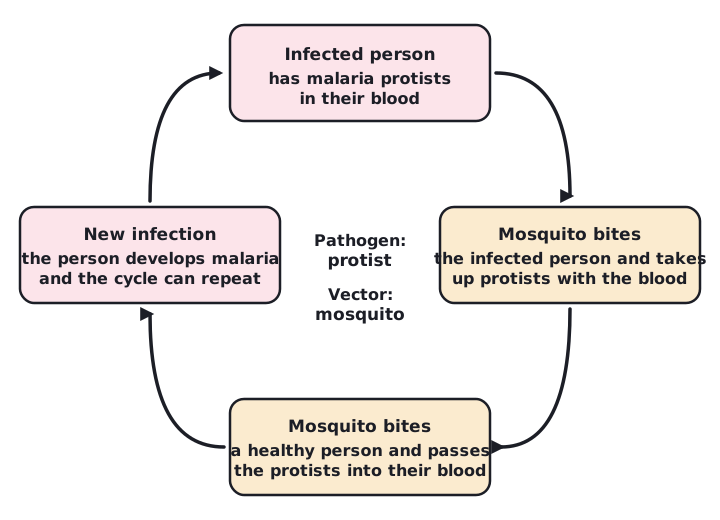
A vector is an organism that carries a pathogen from one host to another without usually being harmed itself. The malaria vector is the mosquito. Killing or avoiding the vector breaks the chain.
Mosquitoes do not cause malaria. The protist causes it. The mosquito is only the vector that carries the protist.
 (opens full size in a new tab)
Written and checked against the Edexcel GCSE Biology (1BI0) specification · Updated October 2026