
Bacterial cellsSpec 1.1
In short
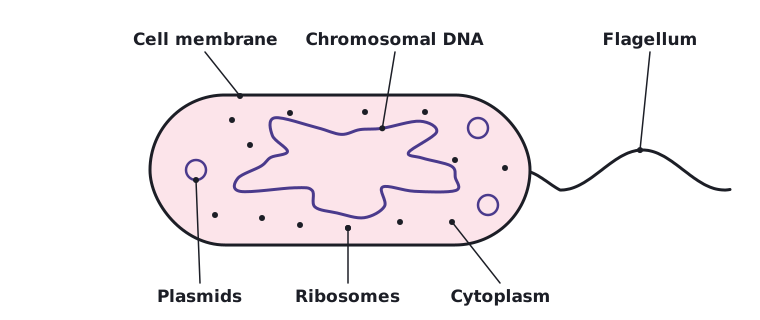
Bacteria are prokaryotic cells, so they do not have a nucleus. Their chromosomal DNA is a single loop found free in the cytoplasm, and they often have small rings of extra DNA called plasmids. Unlike animal and plant cells, bacteria have no mitochondria, and some have a flagellum that moves to make the bacterium swim.
Bacteria are prokaryotic cells. They do not have a nucleus. Their genetic material is found free in the cytoplasm.
- Chromosomal DNA
- A single loop of DNA found free in the cytoplasm, not enclosed in a nucleus.
- Plasmid DNA
- Small rings of extra DNA, separate from the chromosomal DNA.
- Cell membrane
- Controls the movement of substances into and out of the cell.
- Ribosomes
- Where proteins are made.
- Flagellum
- A long, whip-like structure that moves to make the bacterium swim. Some bacteria have one or more flagella.
| Feature | Eukaryotic cell (animal, plant) | Prokaryotic cell (bacterium) |
|---|---|---|
| Nucleus | Present, contains the DNA | Absent |
| Where the DNA is | Inside the nucleus | Free in the cytoplasm |
| Plasmids | Not present | Often present |
| Mitochondria | Present | Absent |
| Flagella | Not present | Present in some |
 (opens full size in a new tab)
Common mistake:
Bacteria do have genetic material. Write that it is not in a nucleus, never that bacteria have no DNA.
Written and checked against the Edexcel GCSE Biology (1BI0) specification · Updated October 2026