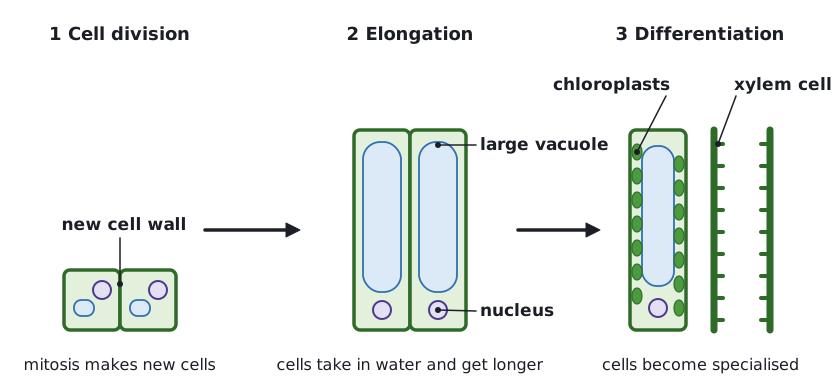
Growth is an increase in the size or mass of an organism. Animals grow by cell division and differentiation. Plants grow by cell division, elongation and differentiation. In elongation, plant cells made by mitosis get longer, mostly by taking in water, which is what makes plants grow taller and roots grow longer.
Growth is an increase in the size or mass of an organism. It involves different processes in animals and plants.
Growth in animals and plants
Animals
Plants
Cell division
Yes, by mitosis
Yes, by mitosis
Differentiation
Yes
Yes
Elongation
No
Yes: cells get longer
In animals, growth happens by cell division and differentiation. New cells are made by mitosis and then become specialised for particular jobs.
In plants, growth happens by cell division, elongation and differentiation. Cells made by mitosis then get longer (elongate), mostly by taking in water so that the cell expands. After elongating, they differentiate. Elongation is what makes plants grow taller and roots grow longer.
If a question asks how plants grow, name all three processes. Animals do not grow by elongation.
Written and checked against the Edexcel GCSE Biology (1BI0) specification · Updated October 2026
Frequently asked questions
Why are stem cells useful in medicine?
Stem cells are useful in medicine because they are undifferentiated, so they could divide and differentiate to replace damaged or diseased cells. Possible uses include treating diabetes and paralysis and growing replacement tissues. The risks are that they may form tumours, pass on viruses from donated cells or be rejected by the immune system.
What is the difference between embryonic and adult stem cells?
Embryonic stem cells, found in early embryos, can differentiate into any type of cell. Adult stem cells, found in some tissues such as bone marrow, can only differentiate into a limited range of cell types. Adult stem cells replace cells that are damaged or worn out, for example bone marrow makes new blood cells.
How do plants grow differently from animals?
Plants grow by cell division, elongation and differentiation, while animals grow only by cell division and differentiation. Elongation is when plant cells made by mitosis get longer, mostly by taking in water. This makes plants grow taller and roots grow longer. Meristems also let plants keep growing throughout their life.

 (opens full size in a new tab)