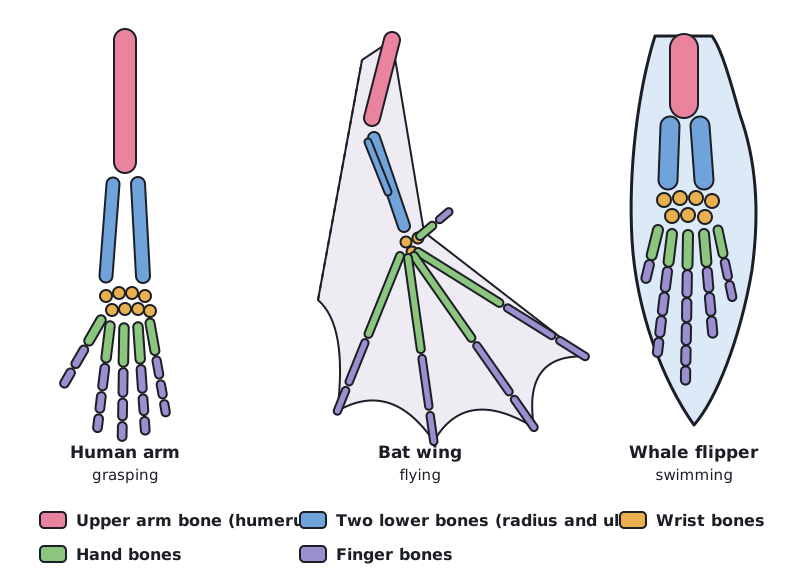
The pentadactyl limb is a limb with five digits. Humans, bats, whales and frogs all have the same basic arrangement of bones: one upper bone, two lower bones, then wrist, hand and finger bones. This similarity is evidence that they share a common ancestor, with natural selection adapting the limb for different functions.
The pentadactyl limb is a limb with five digits. The same basic pattern of bones is found in the limbs of many vertebrates, including humans, bats, whales and frogs.
Although these limbs do different jobs (grasping, flying, swimming, jumping), they have the same basic arrangement of bones: one upper bone, two lower bones, then wrist, hand and finger bones. The size and shape of the bones differ to suit each function.
This provides evidence for evolution. The similar bone structure suggests the animals share a common ancestor, and natural selection has adapted the limb to different ways of life over time. If each animal had evolved separately, there would be no reason for the same bone pattern.
Exam tip:
Use the two ideas together: same structure suggests a common ancestor; different functions are due to adaptation by natural selection.
Written and checked against the Edexcel GCSE Biology (1BI0) specification · Updated October 2026
Frequently asked questions
What fossil evidence is there for human evolution?
Fossils show a gradual change from ape-like ancestors to modern humans. Ardi, from 4.4 million years ago, walked upright but could climb trees. Lucy, from 3.2 million years ago, walked upright with more human-like feet. Fossils from 1.6 million years ago show a larger brain and longer legs. Upright walking came first.
How is the pentadactyl limb evidence for evolution?
Triple only The pentadactyl limb is evidence for evolution because many vertebrates, including humans, bats, whales and frogs, have the same basic arrangement of bones even though their limbs do different jobs. This suggests they share a common ancestor, and natural selection has adapted the limb to different ways of life over time.
Why was the three-domain system introduced?
The three-domain system was introduced because improved genetic analysis showed that the prokaryotes are not all closely related. Comparing genetic material revealed differences that observing structure could not. So the prokaryotes were split into two domains, Archaea and Bacteria, with all organisms that have a nucleus in a third domain, Eukarya.

 (opens full size in a new tab)