Book a tutor

The urinary system

Animal coordination, control and homeostasis · The urinary system and the kidneys · note 1 of 5

Spec 7.18B
Triple only (what this means)Triple only: only in Triple Biology. Combined Science students can skip it. What the labels mean
Download all The urinary system and the kidneys notes (PDF)Download all notes (PDF)5 pages

The urinary systemSpec 7.18B

In short

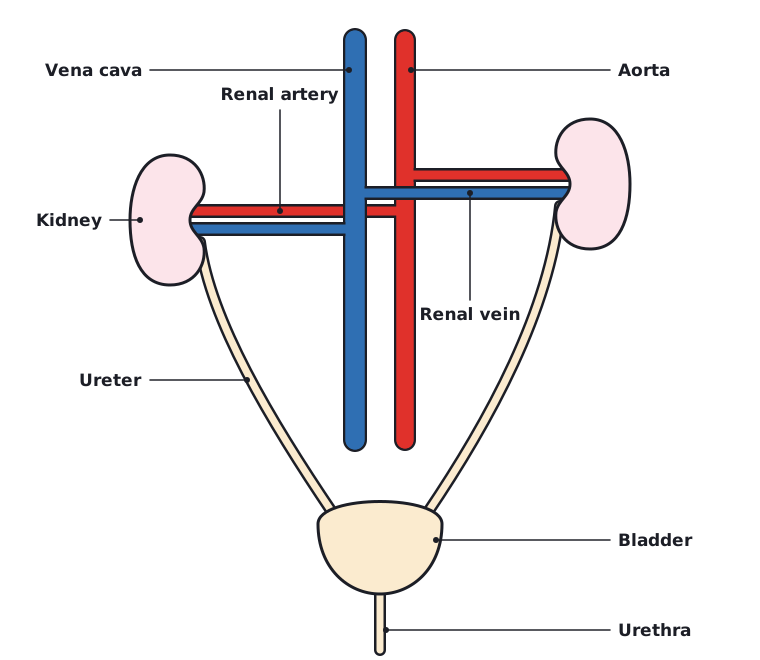
The urinary system removes waste from the blood as urine. The renal artery brings blood to each kidney, where it is filtered, and the renal vein takes it away. Urine passes from the kidneys down the ureters to the bladder, where it is stored, and leaves the body through the urethra.

The urinary system removes waste from the blood and gets rid of it as urine.

PartFunction
KidneysFilter the blood and make urine
Renal arteryBrings blood to the kidney
Renal veinTakes blood away from the kidney
UretersTubes that carry urine from the kidneys to the bladder
BladderStores urine
UrethraTube that carries urine out of the body
The urinary system: two kidneys connected to the aorta by renal arteries and to the vena cava by renal veins, with a ureter from each kidney to the bladder and the urethra leading out of the bladder. (opens full size in a new tab)
The urinary system. The renal artery brings blood to each kidney and the renal vein takes it away.

Written and checked against the Edexcel GCSE Biology (1BI0) specification · Updated October 2026

Frequently asked questions

How does the kidney filter blood?

The kidney filters blood in its many nephrons. In each nephron, blood in the glomerulus is at high pressure, so small molecules such as water, glucose, urea and ions are forced out into the Bowman's capsule. Proteins and blood cells are too large and stay in the blood. Useful substances are then reabsorbed.

Why is there no glucose in urine?

There is no glucose in the urine of a healthy person because it is all reabsorbed in the nephron. Glucose is small, so it is filtered out of the blood at the glomerulus into the Bowman's capsule. In the first part of the tubule, all of it is reabsorbed into the blood by active transport, which uses energy from respiration.

What does ADH do in the kidneys?

Higher tier ADH makes the collecting ducts of the kidneys more permeable to water, so more water is reabsorbed into the blood. The pituitary gland releases more ADH when the blood water content is too low, so a small volume of concentrated urine is made. When the water content is too high, less ADH is released and the urine is dilute.

All 4 questions on The urinary system and the kidneys