
Plant hormones, phototropism and gravitropismSpec 6.15B
In short
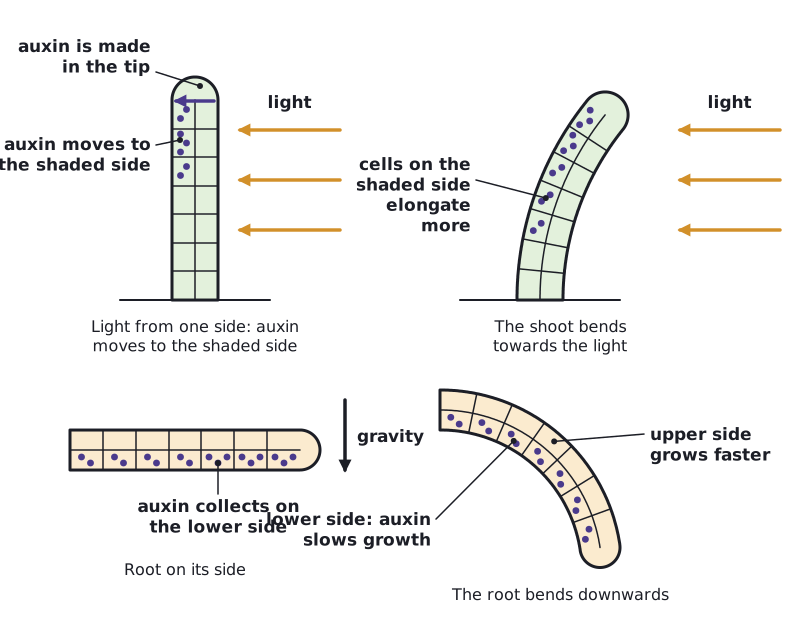
A tropism is a growth response to a stimulus, and auxins are the plant hormones involved in phototropism and gravitropism. In a shoot lit from one side, auxin moves to the shaded side and makes those cells elongate, so the shoot bends towards the light. In roots, auxin slows growth on the lower side, so roots grow downwards.
Plant hormones are chemicals that control and coordinate plant growth and development. They are made in one part of the plant and move to other parts, where they change how cells grow.
A tropism is a growth response to a stimulus. A growth towards the stimulus is positive. A growth away from the stimulus is negative. Auxins are the plant hormones involved in two tropisms:
- Phototropism: growth in response to light.
- Gravitropism: growth in response to gravity.
Auxins in shoots
- Auxin is made in the tip of the shoot.
- When light shines from one side, auxin moves to the shaded side of the shoot.
- In shoots, auxin makes cells elongate (get longer), so the cells on the shaded side grow faster.
- The shoot bends towards the light. Shoots are positively phototropic.
If a shoot is lying on its side, auxin collects on the lower side. The cells there elongate more, so the shoot bends upwards, away from gravity. Shoots are negatively gravitropic.
Auxins in roots
Roots respond differently to auxin. In a root that is lying on its side, auxin collects on the lower side, where it slows the growth of the cells. The cells on the upper side grow faster, so the root bends downwards, in the direction of gravity. Roots are positively gravitropic. Roots also grow away from light, so they are negatively phototropic.
| Response to light | Response to gravity | |
|---|---|---|
| Shoot | Positive phototropism (grows towards light) | Negative gravitropism (grows upwards) |
| Root | Negative phototropism (grows away from light) | Positive gravitropism (grows downwards) |
 (opens full size in a new tab)
Tell the story in order: where auxin is made, where it moves to, what it does to cell growth there, and which way the plant bends as a result.
Written and checked against the Edexcel GCSE Biology (1BI0) specification · Updated October 2026