
Book a tutor

Thyroxine and negative feedback

Animal coordination, control and homeostasis · Hormones and the endocrine system · note 3 of 3

Spec 7.3
Higher tier (what this means)Higher tier: only on the Higher tier papers. Foundation students can skip it. What the labels mean
Download all Hormones and the endocrine system notes (PDF)Download all notes (PDF)4 pages

Thyroxine and negative feedbackSpec 7.3

In short

Thyroxine is a hormone made by the thyroid gland that controls metabolic rate, the rate of the chemical reactions in the body. Its level is kept steady by negative feedback. A low level stimulates the hypothalamus to produce TRH, which makes the pituitary gland release TSH, and TSH makes the thyroid produce thyroxine. A normal level inhibits TRH and TSH.

Thyroxine is made by the thyroid gland. It controls metabolic rate, which is the rate of the chemical reactions in the body. Its level is kept steady by negative feedback.

Negative feedback
A change in a level causes a response that reverses the change and brings the level back to normal.
  1. A low level of thyroxine stimulates the hypothalamus to produce TRH.
  2. TRH causes the pituitary gland to release TSH.
  3. TSH acts on the thyroid gland to produce thyroxine.
  4. The thyroxine level rises back to normal.
  5. When the thyroxine level is normal, thyroxine inhibits the release of TRH and the production of TSH. This stops the level rising too far.
Common mistake:

TRH is made in the hypothalamus and TSH is released from the pituitary gland. Mixing up the two organs loses marks.
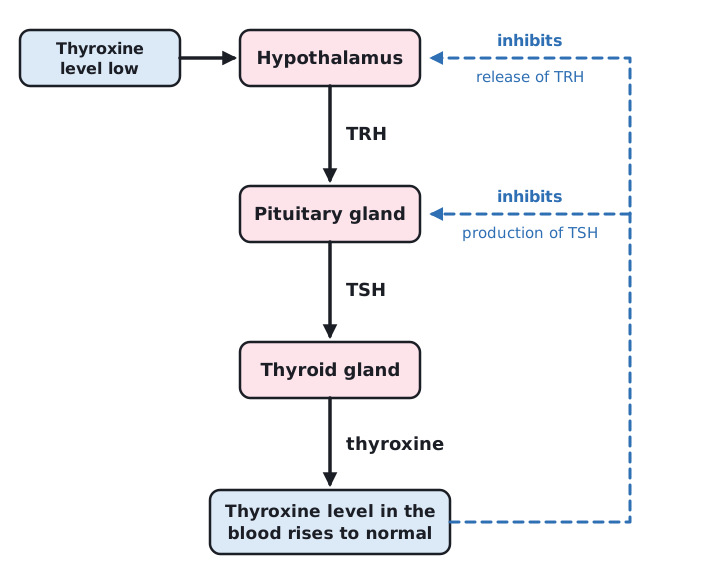
Flow diagram: a low thyroxine level stimulates the hypothalamus to release TRH, TRH acts on the pituitary gland to release TSH, TSH acts on the thyroid gland to make thyroxine, and dashed arrows show the normal thyroxine level inhibiting TRH release and TSH production. (opens full size in a new tab)
Thyroxine is controlled by negative feedback: when its level is back to normal it inhibits TRH and TSH.

Quick check

  1. How are hormones transported from endocrine glands to target organs?

    Show answer

    In the blood (plasma).

  2. Which gland produces insulin?

    Show answer

    The pancreas.

  3. Name the four effects of adrenalin. (Higher)

    Show answer

    Increased heart rate, increased blood pressure, increased blood flow to the muscles, and raised blood sugar level.

  4. Which hormone does the pituitary release to make the thyroid produce thyroxine? (Higher)

    Show answer

    TSH.

Written and checked against the Edexcel GCSE Biology (1BI0) specification · Updated October 2026

Frequently asked questions

Why are hormones called chemical messengers?

Hormones are called chemical messengers because they are chemicals that carry a signal from one part of the body to another. They are made in endocrine glands and released straight into the blood, which carries them around the whole body in the plasma. Each hormone only causes a response in its target organs.

What does the pituitary gland do?

Higher tier The pituitary gland is an endocrine gland at the base of the brain that releases hormones that control other glands and organs. It releases FSH and LH, which act on the ovaries in the menstrual cycle, and TSH, which acts on the thyroid gland and makes it produce thyroxine.

What does adrenalin do to the body?

Higher tier Adrenalin prepares the body for fight or flight. It increases heart rate and blood pressure, so blood is pumped to the organs faster, and increases blood flow to the muscles, giving them more oxygen and glucose for respiration. It also stimulates the liver to change glycogen into glucose, which raises the blood sugar level.

All 4 questions on Hormones and the endocrine system

Finished hormones and the endocrine system? Test yourself:Exam questionsFlashcards