
Food chains and food websSpec 4.7
In short
A food chain shows the feeding relationships in a community. It always begins with a producer, and the arrows show the direction food and energy pass, from the food to the organism that eats it. A food web shows how the food chains in a habitat are linked, so one organism can feed at more than one trophic level.
Feeding relationships in a community can be shown by food chains. All food chains begin with a producer, usually a green plant or alga that makes glucose by photosynthesis. The arrows show the direction in which food, and so energy and substances, pass.
| Name | What it does | Example |
|---|---|---|
| Producer | Makes glucose by photosynthesis | Grass |
| Primary consumer | Eats the producer | Grasshopper |
| Secondary consumer | Eats the primary consumer | Frog |
| Tertiary consumer | Eats the secondary consumer | Snake |
Consumers that kill and eat other animals are predators, and those eaten are prey.
 (opens full size in a new tab)
Food webs
Most organisms eat more than one type of food, and are eaten by more than one type of predator. A food web shows how all the food chains in a habitat are linked together. In a food web an organism can be at more than one trophic level. For example, an owl that eats mice and also eats shrews that have eaten beetles is both a secondary and a tertiary consumer.
Because the food chains are linked, a change in the population of one organism can affect many others. If one prey species dies out, its predators may eat more of another prey species, whose numbers then fall.
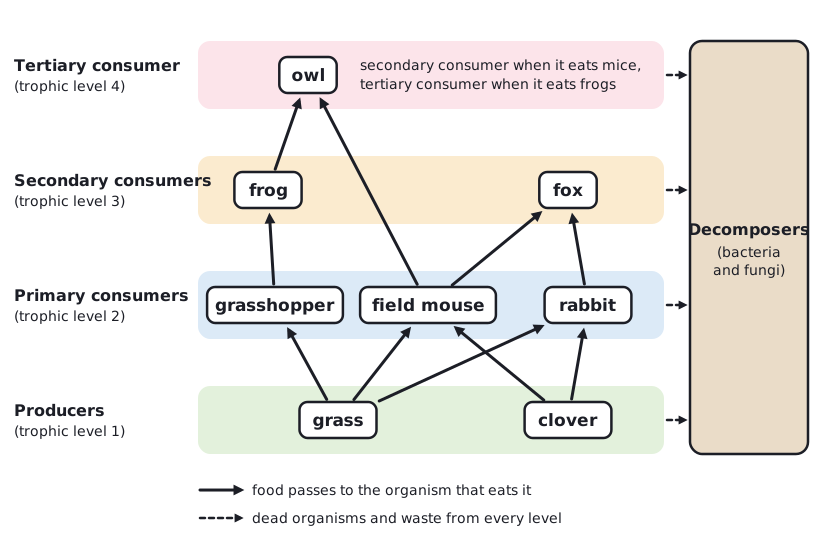 (opens full size in a new tab)
Arrows in a food chain or web point from the food to the animal that eats it. Grass → rabbit means the rabbit eats the grass.
Written and checked against the Edexcel IGCSE Biology (4BI1) specification · Updated October 2026