
Blood: composition, plasma and red blood cellsSpec 2.59, 2.60, 2.61
In short
Blood is a tissue made of plasma, red blood cells, white blood cells and platelets. Plasma transports carbon dioxide, digested food, urea, hormones and heat energy. Red blood cells transport oxygen: their biconcave disc shape gives a large surface area, they contain haemoglobin that combines with oxygen to form oxyhaemoglobin, and they have no nucleus.
Blood is a tissue made of a liquid, plasma, with red blood cells, white blood cells and platelets suspended in it.
| Component | Description | Main job |
|---|---|---|
| Red blood cells | Biconcave discs with no nucleus, full of haemoglobin | Transport oxygen |
| White blood cells | Larger cells with a nucleus. Phagocytes and lymphocytes are two types | Defend the body against pathogens |
| Platelets | Small fragments of cells with no nucleus | Help the blood to clot |
| Plasma | Pale yellow liquid | Transports blood cells and dissolved substances |
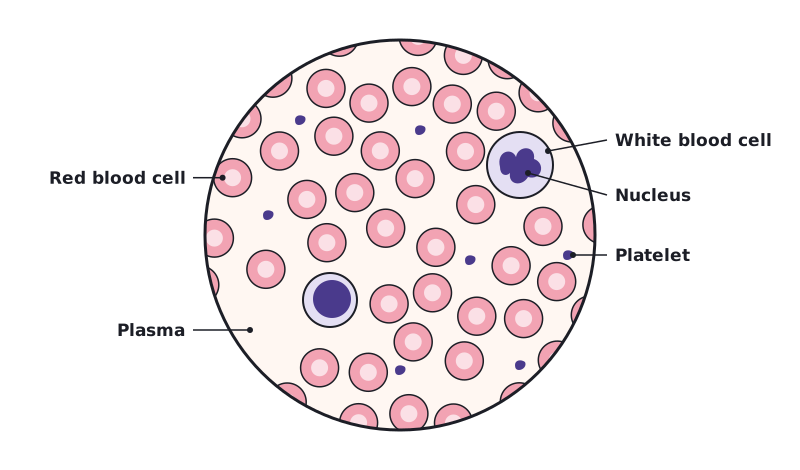 (opens full size in a new tab)
Plasma
Plasma is mostly water. It transports substances around the body, dissolved or carried in it.
| Substance | Transported from | Transported to |
|---|---|---|
| Carbon dioxide | Respiring cells | The lungs |
| Digested food (such as glucose and amino acids) | The small intestine | All the cells of the body |
| Urea | The liver, where it is made | The kidneys, to be removed in urine |
| Hormones | The glands that make them | Their target organs |
| Heat energy | Warm, active organs such as the liver and muscles | Other parts of the body, including the skin |
Red blood cells
Red blood cells transport oxygen from the lungs to all the cells of the body. Three adaptations help them to do this.
- The biconcave disc shape gives a large surface area, so oxygen can diffuse in and out quickly.
- They contain haemoglobin, a red pigment that combines with oxygen in the lungs to form oxyhaemoglobin, and releases it in the tissues.
- They have no nucleus, which leaves more room inside the cell for haemoglobin.
Red blood cells carry oxygen. Haemoglobin is the substance inside them that binds to oxygen. Do not say that the cells 'carry haemoglobin'.
Written and checked against the Edexcel IGCSE Biology (4BI1) specification · Updated October 2026