
Meiosis, fertilisation and chromosome numberSpec 3.30, 3.31, 3.32
In short
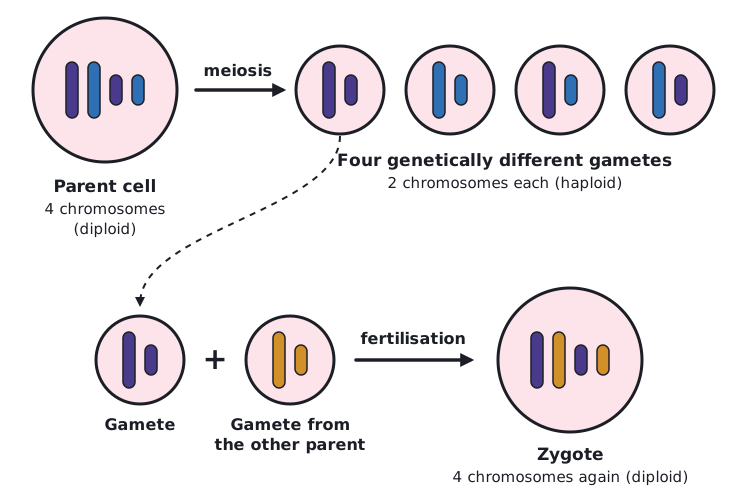
Meiosis is the type of cell division that makes gametes, in the ovaries and testes. One diploid cell divides to produce four haploid gametes, each with half the number of chromosomes and genetically different from each other. In humans, 46 chromosomes become 23. Random fertilisation restores 46 in the zygote and produces genetic variation.
Meiosis is the type of cell division that makes gametes (sex cells). In humans it happens in the reproductive organs: the ovaries and the testes.
- One diploid cell divides to produce four cells.
- Each cell has half the number of chromosomes of the parent cell.
- The cells are genetically different from each other and from the parent cell.
- The four cells are haploid gametes, with one set of chromosomes.
In human cells the diploid number is 46 and the haploid number is 23. Meiosis makes sperm and egg cells with 23 chromosomes each.
| Body cell (diploid) | Gamete (haploid) | |
|---|---|---|
| Chromosomes in a human cell | 46 | 23 |
| Genetically identical to the others? | Yes, if made by mitosis | No, each gamete is different |
| Made by | Mitosis | Meiosis |
Fertilisation and variation
At fertilisation, a sperm and an egg fuse to make a zygote with 46 chromosomes again, half from each parent. Fertilisation is random: any sperm can fuse with any egg.
Each gamete is genetically different, and any gamete can fuse with any other. So random fertilisation produces genetic variation in the offspring. Brothers and sisters are not identical to each other, or to either parent.
 (opens full size in a new tab)
The stages of meiosis are not required. Learn the outcome: four genetically different haploid gametes, each with half the number of chromosomes.
Written and checked against the Edexcel IGCSE Biology (4BI1) specification · Updated October 2026