
Fungi and protoctistsSpec 1.2
In short
Fungi are eukaryotic organisms that cannot photosynthesise. Most are made of thread-like hyphae forming a mycelium, have cell walls made of chitin and feed by saprotrophic nutrition: they secrete digestive enzymes onto food outside the body and absorb the products. Protoctists are microscopic single-celled eukaryotes, such as Amoeba, Chlorella and Plasmodium, which causes malaria.
Fungi
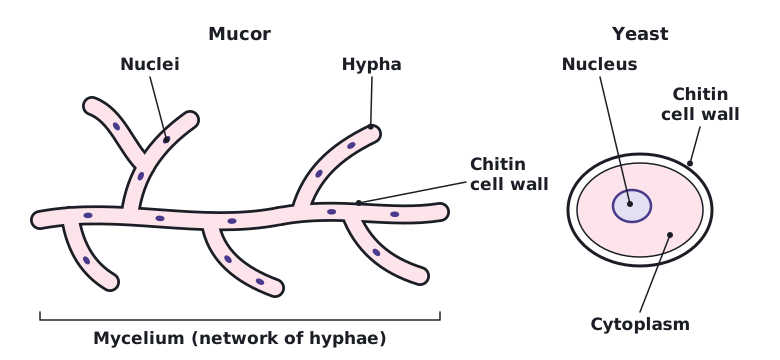
Fungi are eukaryotic organisms that are not able to carry out photosynthesis. Most have a body organised into a mycelium, made from thread-like structures called hyphae, which contain many nuclei. Some fungi are single-celled.
- Their cell walls are made of chitin.
- They feed by secreting digestive enzymes onto food material outside the body (extracellular secretion), then absorbing the organic products. This is called saprotrophic nutrition.
- They may store carbohydrate as glycogen.
Mucor shows the typical fungal hyphal structure. Yeast is a single-celled fungus.
 (opens full size in a new tab)
Protoctists
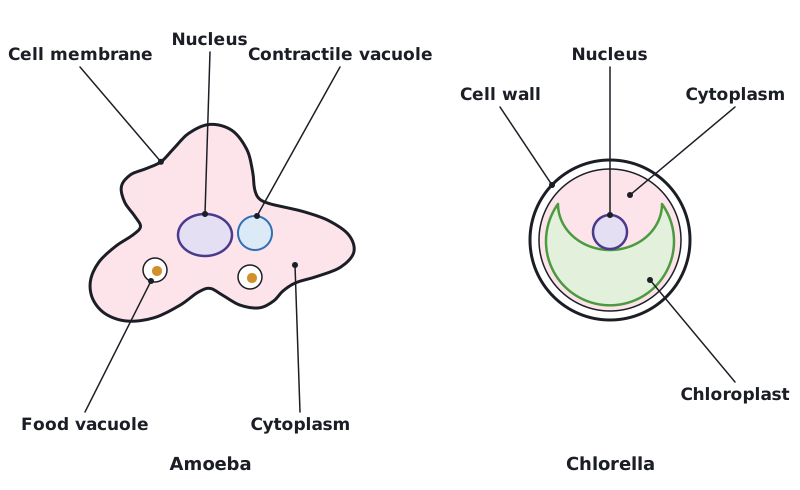
Protoctists are microscopic single-celled eukaryotic organisms. They are a varied group.
- Amoeba lives in pond water and has features like an animal cell.
- Chlorella has chloroplasts and is more like a plant cell.
- Plasmodium is a pathogen. It causes malaria.
 (opens full size in a new tab)
Write 'protoctists', the word used in this specification. A protoctist is single-celled, but not every single-celled organism is a protoctist: bacteria and yeast are not.
Written and checked against the Edexcel IGCSE Biology (4BI1) specification · Updated October 2026