
Alveoli and gas exchangeSpec 2.48
In short
Alveoli are tiny air sacs in the lungs where oxygen diffuses into the blood and carbon dioxide diffuses out. They are adapted for gas exchange: millions of alveoli give a very large surface area, walls one cell thick give a short diffusion distance, and a rich capillary network and ventilation keep a steep concentration gradient.
The lungs are the exchange surface for oxygen and carbon dioxide. Each lung contains millions of tiny air sacs called alveoli. Gases move between the air in the alveoli and the blood in the capillaries around them by diffusion.
- Oxygen diffuses from the air in the alveoli (high concentration) into the blood (low concentration).
- Carbon dioxide diffuses from the blood (high concentration) into the air in the alveoli (low concentration), and is breathed out.
| Adaptation | Why it helps |
|---|---|
| Millions of alveoli | Gives a very large surface area for diffusion |
| Walls only one cell thick | Short diffusion distance, so gases diffuse quickly |
| Capillary walls only one cell thick | Short diffusion distance between the air and the blood |
| Rich network of capillaries (good blood supply) | Blood carries oxygen away and brings carbon dioxide, keeping a steep concentration gradient |
| Moist lining | Gases dissolve, which helps them to diffuse |
| Ventilation (breathing in and out) | Keeps a high oxygen concentration in the alveoli and a low carbon dioxide concentration, which maintains the concentration gradient |
Do not stop at the adaptation. Link every feature to its effect: for example, thin walls means a short diffusion distance, so faster diffusion.
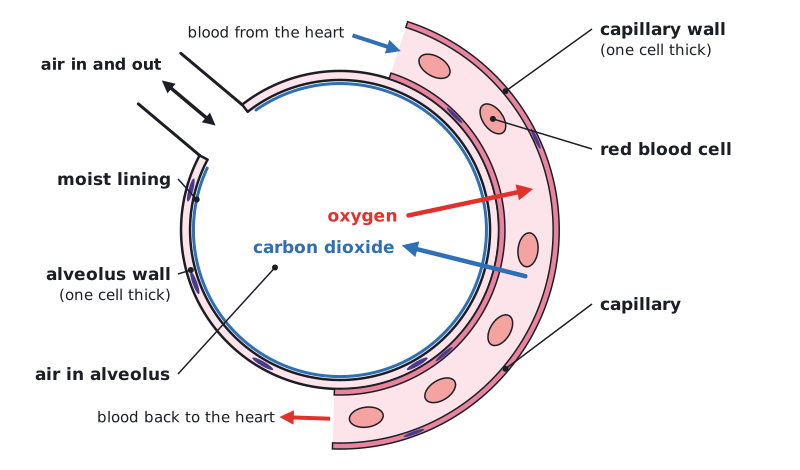 (opens full size in a new tab)
Written and checked against the Edexcel IGCSE Biology (4BI1) specification · Updated October 2026