
Book a tutor

Responding to change: stimulus, receptor, effector

Structure and functions in living organisms · Coordination, homeostasis and plant responses · note 1 of 3

Responding to change: stimulus, receptor, effectorSpec 2.80, 2.82

In short

A stimulus is a change in the environment. A co-ordinated response needs a stimulus, a receptor that detects it and an effector, a muscle or gland, that carries out the response. In animals a coordination centre such as the brain or spinal cord links receptor and effector using nerves or hormones. Plants respond mainly by changing how they grow.

Organisms must respond to changes in their environment to survive. A change in the environment is a stimulus. Animals and plants both respond to stimuli, but they do it in different ways.

  • Animals use the nervous system (fast, electrical impulses) and hormones (chemical messengers in the blood).
  • Plants respond mainly by changing the way they grow, using plant hormones.

A co-ordinated response needs three parts: a stimulus, a receptor and an effector.

The parts of a co-ordinated response
PartWhat it doesExample
StimulusA change in the environmentA hot object touching the hand
ReceptorA cell or organ that detects the stimulusTemperature receptors in the skin
EffectorA muscle or gland that carries out the responseA muscle that contracts to pull the hand away

In animals, a coordination centre (such as the brain or spinal cord) usually links the receptor to the effector. It receives information from the receptor and sends signals to the effector.
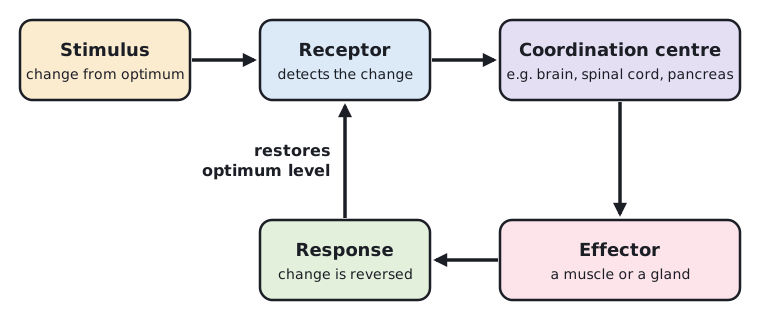
Flow diagram of a control system: stimulus, receptor, coordination centre, effector and response, with an arrow from the response back to the receptor labelled restores optimum level. (opens full size in a new tab)
A control system in homeostasis: stimulus → receptor → coordination centre → effector → response. Here the response reverses the change and restores the optimum level.
Common mistake:

Effectors are muscles or glands only. Do not write that the brain or a receptor is an effector.

Written and checked against the Edexcel IGCSE Biology (4BI1) specification · Updated October 2026

Frequently asked questions

What is the difference between a receptor and an effector?

A receptor is a cell or organ that detects a stimulus, while an effector is a muscle or gland that carries out the response. For example, temperature receptors in the skin detect a hot object, and a muscle in the arm contracts to pull the hand away. The brain and receptors are never effectors.

Why is homeostasis important?

Homeostasis is important because enzymes and cells work best in a narrow range of conditions. If body temperature or body water content moves too far from normal, reactions in cells slow down or stop. Homeostasis keeps the internal environment constant by bringing conditions back to a set level, keeping them within narrow limits.

How does auxin make a shoot bend towards light?

Auxin makes a shoot bend towards light by causing unequal growth. It is made in the shoot tip, and when light shines from one side it moves to the shaded side. There it makes the cells elongate more, so the shaded side grows faster than the lit side and the shoot bends towards the light.

All 4 questions on Coordination, homeostasis and plant responses