
Book a tutor

FSH and LH in the menstrual cycle

Reproduction and inheritance · Human reproduction · note 3 of 5

Spec 3.10B
Biology only (what this means)Biology only: only in International GCSE Biology. Double Award students can skip it. What the labels mean
Download all Human reproduction notes (PDF)Download all notes (PDF)7 pages

FSH and LH in the menstrual cycleSpec 3.10B

In short

FSH and LH are hormones released by the pituitary gland that control the menstrual cycle with oestrogen and progesterone. FSH causes an egg to mature and stimulates the ovaries to make oestrogen. High oestrogen inhibits FSH and stimulates LH release, and LH causes ovulation around day 14. Progesterone then maintains the lining and inhibits FSH and LH.

Four hormones interact to control the cycle. FSH and LH are released by the pituitary gland. Oestrogen and progesterone are made by the ovaries.

Hormones of the menstrual cycle
HormoneMade inWhat it does
FSHPituitary glandCauses an egg to mature in an ovary. Stimulates the ovaries to produce oestrogen
OestrogenOvariesRepairs and builds up the uterus lining. Inhibits FSH. Stimulates the release of LH
LHPituitary glandCauses ovulation
ProgesteroneOvariesMaintains the uterus lining. Inhibits FSH and LH
  1. FSH makes an egg mature and stimulates the ovaries to make oestrogen.
  2. Oestrogen repairs the uterus lining. When oestrogen is high it inhibits FSH and stimulates the release of LH.
  3. LH causes ovulation, around day 14.
  4. After ovulation the ovary produces progesterone, which maintains the lining and inhibits FSH and LH, so no more eggs mature.
  5. If there is no pregnancy, progesterone falls. The lining is no longer maintained and breaks down. This is menstruation.
Exam tip:

Always say what each hormone does to the next one: stimulates or inhibits. Just writing ‘oestrogen affects LH’ will not score.
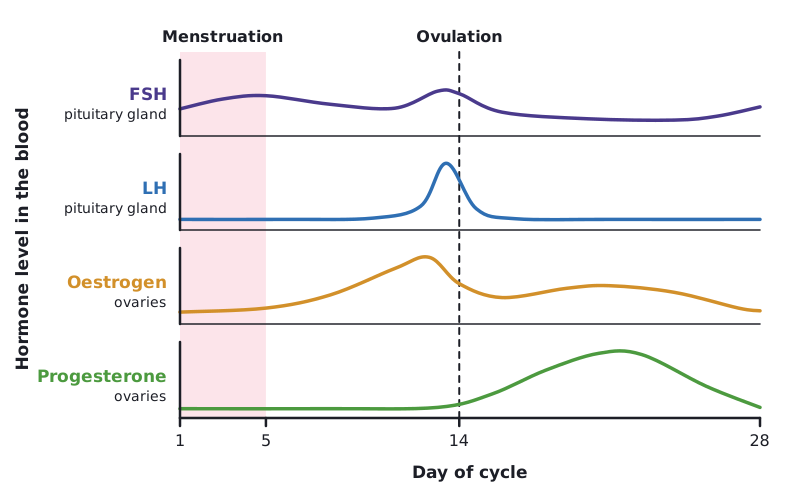
Four stacked graphs over a 28-day cycle: FSH peaks early and slightly before day 14, LH has a sharp peak just before ovulation at day 14, oestrogen rises to a peak before ovulation, and progesterone rises after ovulation, peaks around day 21 and falls before menstruation. (opens full size in a new tab)
Levels of FSH, LH, oestrogen and progesterone. The LH surge triggers ovulation around day 14.

Written and checked against the Edexcel IGCSE Biology (4BI1) specification · Updated October 2026

Frequently asked questions

What does FSH do in the menstrual cycle?

Biology only FSH, released by the pituitary gland, causes an egg to mature in an ovary and stimulates the ovaries to produce oestrogen. As oestrogen rises, it inhibits FSH and stimulates the release of LH, which causes ovulation. After ovulation, progesterone inhibits FSH and LH, so no more eggs mature.

What are the roles of oestrogen and progesterone in the menstrual cycle?

Oestrogen and progesterone are both made in the ovaries. Oestrogen causes the repair and growth of the uterus lining after menstruation. Progesterone maintains the thick lining, ready for a fertilised egg. If the egg is not fertilised, progesterone falls, the lining is no longer maintained and it breaks down in menstruation.

How does the placenta provide for the developing embryo?

The placenta lets substances pass between the mother's blood and the embryo's blood by diffusion, without the bloods mixing. Oxygen and nutrients such as glucose and amino acids diffuse into the embryo's blood, while carbon dioxide and urea diffuse into the mother's blood. Villi, thin walls and a good blood supply speed up diffusion.

All 5 questions on Human reproduction