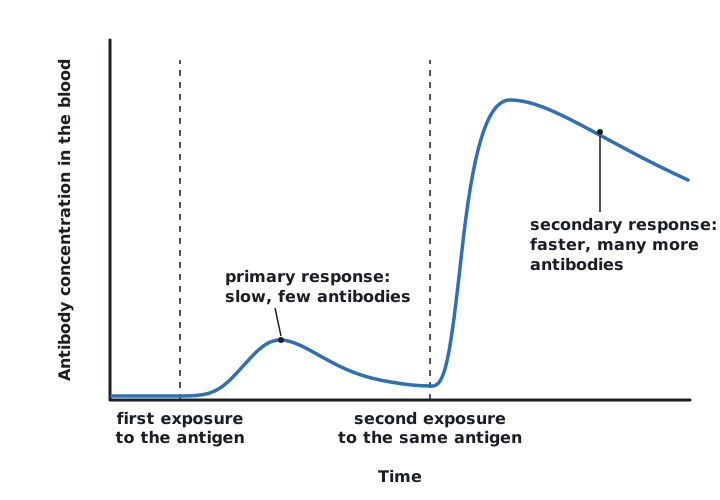
Vaccination is giving a person a harmless form of a pathogen, such as a dead or weakened one, that still carries its antigens. The antigens trigger lymphocytes to release antibodies and make memory cells. If the live pathogen enters later, memory cells recognise it, so antibody production is sooner, faster and in greater quantity.
After an infection, some lymphocytes stay in the blood as memory cells. Vaccination uses this to protect a person before they meet the pathogen.
A person is given a vaccine: a harmless form of the pathogen, such as a dead or weakened one, with its antigens still present.
The antigens trigger lymphocytes to release antibodies. The person does not become ill.
The immune system makes memory cells, which stay in the body.
If the live pathogen enters later, the memory cells recognise it. Antibody production happens sooner, faster and in greater quantity.
The pathogen is destroyed before it can make the person ill.
A vaccine does not put antibodies into the body. It makes your own body produce antibodies and memory cells.
Written and checked against the Edexcel IGCSE Biology (4BI1) specification · Updated October 2026
Frequently asked questions
How are red blood cells adapted to carry oxygen?
Red blood cells are adapted to carry oxygen in three ways. Their biconcave disc shape gives a large surface area for oxygen to diffuse in and out quickly. They contain haemoglobin, which combines with oxygen in the lungs to form oxyhaemoglobin and releases it in the tissues. They have no nucleus, leaving more room for haemoglobin.
How do white blood cells fight infection?
White blood cells fight infection in two ways. Phagocytes surround pathogens and ingest them, then destroy them inside the cell, which is called phagocytosis. Lymphocytes recognise the antigens on a pathogen's surface and release antibodies that are specific to that pathogen. The antibodies attach to the pathogen and help to destroy it.
Why are antibodies specific?
Antibodies are specific because each antibody has a shape that fits the antigens on one particular pathogen only. Antigens are molecules on the surface of a pathogen that the immune system recognises as foreign. A different pathogen has different antigens, so lymphocytes must release a different antibody to help destroy it.

 (opens full size in a new tab)