
DeforestationSpec 4.18B
In short
Deforestation is the removal of large areas of forest, usually by cutting or burning trees. Without roots, minerals are leached and soil is eroded, which can cause flooding. Fewer leaves reduce evapotranspiration, so rainfall falls. Less photosynthesis, plus burning and decay of felled trees, raises atmospheric carbon dioxide, adding to the enhanced greenhouse effect.
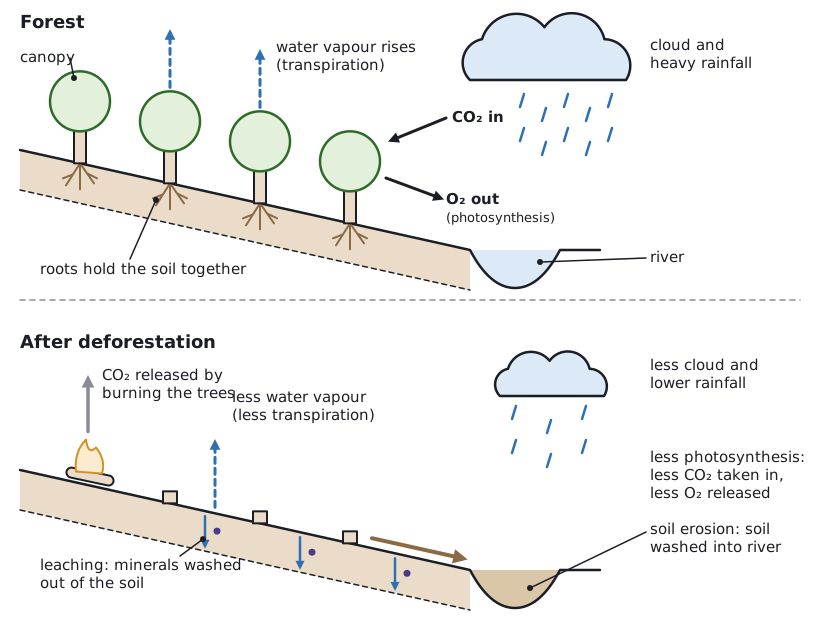
Deforestation is the removal of large areas of forest, usually by cutting or burning the trees, to clear land for farming, timber or building. It affects the soil, the water cycle and the atmosphere.
- Leaching: there are no tree roots to take up minerals, and more rain reaches the soil. Rain washes the dissolved minerals out of the soil, so the soil becomes less fertile.
- Soil erosion: roots no longer hold the soil together, so rain and wind remove the topsoil. The soil washes into rivers, which can cause flooding. The land can become unable to support plants.
- Disturbance of evapotranspiration: fewer trees means less water is lost from leaves by transpiration and less water evaporates from the canopy. There is less water vapour in the air, less cloud and lower rainfall, so the climate becomes drier.
- The carbon cycle and the balance of atmospheric gases: fewer trees means less photosynthesis, so less carbon dioxide is removed from the air and less oxygen is released. Burning or decay of the felled trees releases carbon dioxide by combustion and respiration. The carbon dioxide concentration rises, which adds to the enhanced greenhouse effect.
- Loss of habitats: many species lose their food and shelter, so biodiversity falls.
Use the spec words in your answer: leaching, soil erosion, evapotranspiration and carbon cycle. Link each to its cause (loss of roots, fewer leaves, less photosynthesis).
 (opens full size in a new tab)
Quick check
What gas causes acid rain?
Show answer
Sulfur dioxide.
Why is carbon monoxide poisonous?
Show answer
It combines with haemoglobin, so the blood carries less oxygen.
Name the five greenhouse gases in the spec.
Show answer
Water vapour, carbon dioxide, nitrous oxide, methane and CFCs.
Why does sewage pollution kill fish?
Show answer
Decomposers feeding on it use up the oxygen in the water.
Biology only How does deforestation increase soil erosion?
Show answer
Tree roots no longer hold the soil together.
Written and checked against the Edexcel IGCSE Biology (4BI1) specification · Updated October 2026