
Adrenaline, insulin and the sex hormonesSpec 2.94
In short
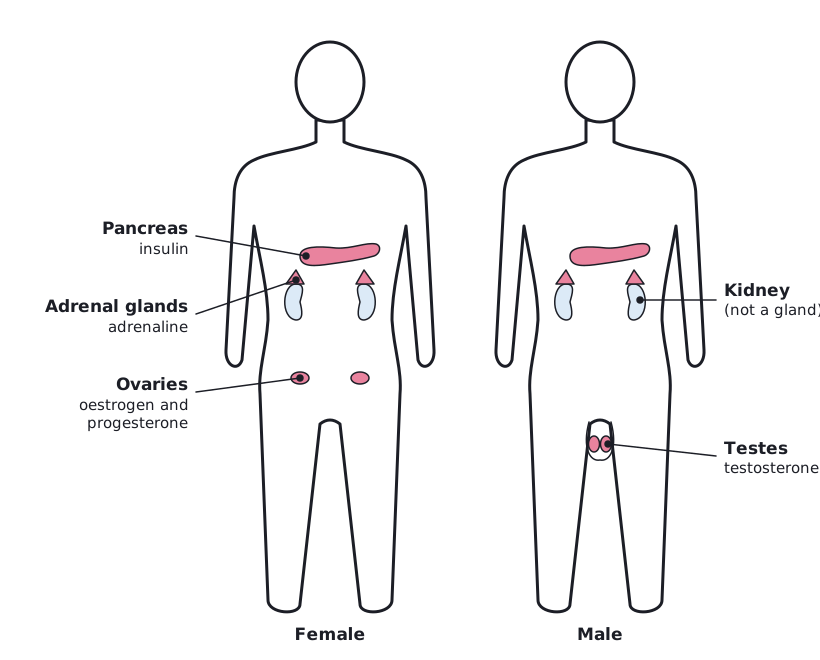
Hormones are chemicals secreted by glands into the blood. Adrenaline from the adrenal glands prepares the body for fight or flight by increasing heart rate. Insulin from the pancreas lowers blood glucose by making cells take up glucose and the liver store it as glycogen. Testosterone comes from the testes, and oestrogen and progesterone from the ovaries.
You need to know the source, role and effects of five hormones.
| Hormone | Source | Role and effects |
|---|---|---|
| Adrenaline | Adrenal glands (on top of the kidneys) | Prepares the body for fight or flight. Increases heart rate, so more blood (with oxygen and glucose) reaches the muscles for respiration. Stimulates the liver to change glycogen into glucose, raising blood glucose |
| Insulin | Pancreas | Controls blood glucose concentration. When blood glucose is high, the pancreas secretes insulin. Insulin makes cells take up glucose from the blood and makes the liver convert glucose into glycogen for storage, so blood glucose falls |
| Testosterone | Testes | Main male sex hormone. Controls the development of male secondary sexual characteristics at puberty and stimulates sperm production |
| Oestrogen | Ovaries | Main female sex hormone. Controls the development of female secondary sexual characteristics at puberty and helps repair and build up the uterus lining in the menstrual cycle |
| Progesterone | Ovaries | Maintains the lining of the uterus in the second half of the menstrual cycle and during pregnancy |
Common mistake:
The pancreas makes insulin, but the liver stores glycogen. Do not write that the pancreas stores glucose.
 (opens full size in a new tab)
Written and checked against the Edexcel IGCSE Biology (4BI1) specification · Updated October 2026