
The nephron and ultrafiltrationSpec 2.74B, 2.75B
In short
A nephron is a tiny tube in the kidney that filters the blood and forms urine. In ultrafiltration, high blood pressure in the glomerulus forces small molecules, such as water, glucose, urea and ions, into the Bowman's capsule, forming the glomerular filtrate. Proteins and blood cells are too large to pass through, so they stay in the blood.
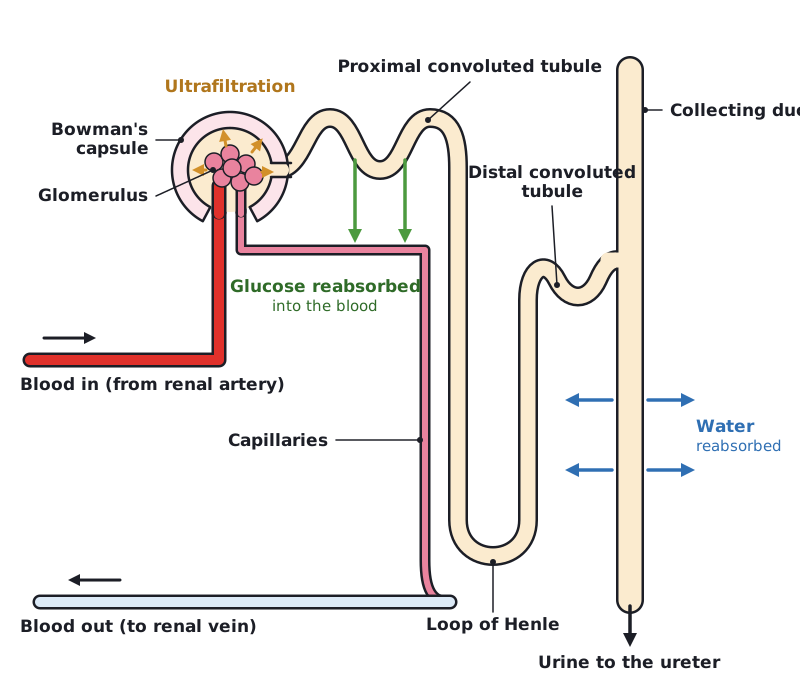
Each kidney contains many tiny tubes called nephrons. A nephron filters the blood and forms urine. Blood enters a knot of capillaries, the glomerulus, which sits inside a cup-shaped Bowman's capsule.
- Bowman's capsule and glomerulus: where blood is filtered.
- Proximal convoluted tubule: the first coiled part of the tubule, after the Bowman's capsule.
- Loop of Henle: the long loop that dips down and comes back up.
- Distal convoluted tubule: the second coiled part of the tubule.
- Collecting duct: the tube that several nephrons drain into, which carries urine towards the ureter.
 (opens full size in a new tab)
Ultrafiltration
Blood in the glomerulus is at high pressure. This forces small molecules out of the blood and into the Bowman's capsule. This is ultrafiltration. The liquid that enters the capsule is the glomerular filtrate. Large molecules and cells are too big to pass through, so they stay in the blood.
| Substance | In the glomerular filtrate? |
|---|---|
| Water | Yes |
| Glucose | Yes |
| Urea | Yes |
| Ions | Yes |
| Proteins | No (too large) |
| Blood cells | No (too large) |
Say that filtration is based on size: small molecules pass into the capsule and proteins and cells do not. Use the word ultrafiltration.
Written and checked against the Edexcel IGCSE Biology (4BI1) specification · Updated October 2026