
Insect- and wind-pollinated flowersSpec 3.3
In short
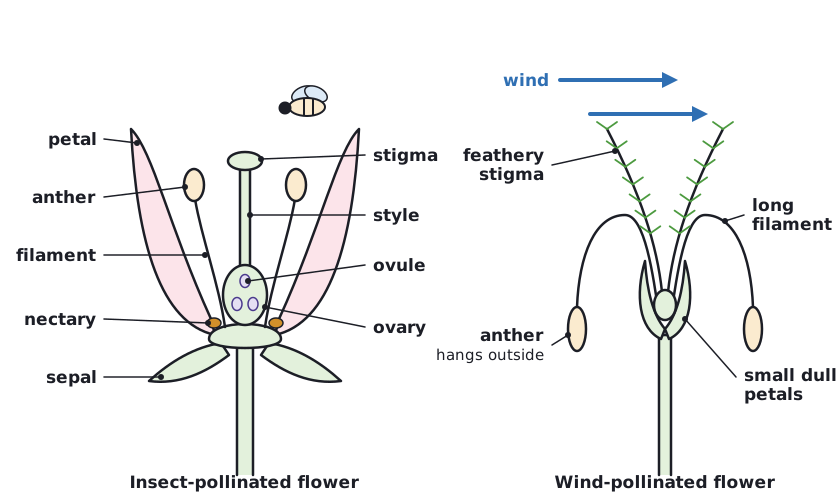
Pollination is the transfer of pollen grains from an anther to a stigma. Insect-pollinated flowers have large, brightly coloured petals, nectaries, anthers and a sticky stigma inside the flower, and sticky or spiky pollen. Wind-pollinated flowers have small dull petals, anthers and large feathery stigmas hanging outside, and large amounts of light, smooth pollen.
The flower is the organ of sexual reproduction in a flowering plant. Pollination is the transfer of pollen grains from an anther to a stigma. Pollen contains the male gametes. The male part of the flower is the stamen (anther and filament). The female part is the carpel (stigma, style and ovary). Flowers are adapted to be pollinated either by insects or by the wind.
| Part | Function |
|---|---|
| Petals | Large and brightly coloured in insect-pollinated flowers to attract insects |
| Sepals | Protect the flower while it is a bud |
| Anther | Makes and releases pollen. Part of the stamen (male part), held on a filament |
| Filament | Holds up the anther |
| Stigma | Where pollen lands. The top of the carpel (female part) |
| Style | Joins the stigma to the ovary |
| Ovary | Contains the ovules |
| Ovule | Contains the female gamete (egg cell) |
| Nectary | Makes sugary nectar to attract insects |
 (opens full size in a new tab)
| Feature | Insect-pollinated flower | Wind-pollinated flower |
|---|---|---|
| Petals | Large, brightly coloured and often scented to attract insects | Small, green or dull, or absent. No need to attract insects |
| Nectar | Nectaries make nectar as food for insects | No nectar |
| Anthers | Inside the flower, so insects brush against them | Hang outside the flower on long filaments, so the wind can blow the pollen away |
| Pollen | Sticky or spiky so it sticks to insects. Smaller amounts | Light and smooth so it is carried by the wind. Made in very large amounts |
| Stigma | Sticky and inside the flower, so pollen from the insect sticks to it | Large and feathery, hanging outside the flower, to catch pollen from the air |
For an ‘explain’ question, give the feature and the reason. For example: ‘feathery stigma (1) gives a large surface area to catch pollen from the air (1)’.
Written and checked against the Edexcel IGCSE Biology (4BI1) specification · Updated October 2026