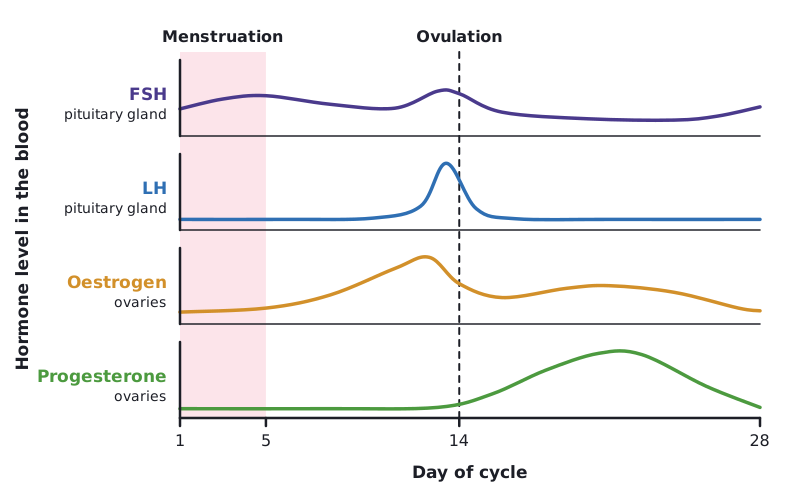
ADH, FSH and LH are three hormones released by the pituitary gland at the base of the brain. ADH makes the collecting ducts of the kidney more permeable to water, so more water is reabsorbed. FSH causes an egg to mature in an ovary and stimulates the ovaries to produce oestrogen. LH stimulates ovulation, the release of the egg.
Three more hormones are released by the pituitary gland, at the base of the brain.
ADH, FSH and LH
Hormone
Source
Role and effects
ADH
Pituitary gland
Controls the water content of the blood. It makes the collecting ducts of the kidney more permeable to water, so more water is reabsorbed into the blood and less urine is made
FSH
Pituitary gland
Causes an egg to mature in an ovary. Stimulates the ovaries to produce oestrogen
LH
Pituitary gland
Stimulates the release of the egg (ovulation) from the ovary
FSH is not the hormone that releases the egg. FSH makes the egg mature; LH stimulates its release.
Written and checked against the Edexcel IGCSE Biology (4BI1) specification · Updated October 2026
Frequently asked questions
Why are hormones called chemical messengers?
Hormones are called chemical messengers because they are chemicals secreted by glands directly into the blood, which carries them to target organs where they cause an effect. Hormonal communication is slower than nervous communication, which uses electrical impulses, but its effects last longer. Hormones reach every part of the body but only affect their target organs.
What does insulin do to blood sugar?
Insulin lowers blood glucose concentration. When blood glucose is high, the pancreas secretes insulin into the blood. Insulin makes cells take up glucose from the blood and makes the liver convert glucose into glycogen for storage, so the blood glucose concentration falls. The pancreas makes insulin, but the liver stores the glycogen.
What does adrenaline do to the body?
Adrenaline prepares the body for fight or flight. It is released by the adrenal glands when a person is frightened or excited. It increases heart rate, so more blood carrying oxygen and glucose reaches the muscles for respiration. It also stimulates the liver to change glycogen into glucose, raising blood glucose.

 (opens full size in a new tab)