
Sexual and asexual reproductionSpec 3.1, 3.2
In short
Sexual reproduction involves two parents, whose male and female gametes fuse at fertilisation to form a zygote, so the offspring show variation. Asexual reproduction involves only one parent and no gametes. The new cells are made by mitosis, so the offspring are genetically identical to the parent and are called clones, giving very little variation.
Sexual reproduction involves two parents. Each parent makes gametes (sex cells). A male gamete and a female gamete join in fertilisation. The offspring inherit genes from both parents, so they show variation and are genetically different from each other and from the parents.
Asexual reproduction involves only one parent and no gametes. The new cells are made by mitosis, so the offspring are genetically identical to the parent. Genetically identical offspring are called clones.
| Sexual reproduction | Asexual reproduction | |
|---|---|---|
| Number of parents | Two | One |
| Gametes | Male and female gametes fuse | No gametes involved |
| Offspring | Genetically different from each other and from the parents | Genetically identical to the parent (clones) |
| Variation in the population | Lots of variation | Very little variation |
Do not write that asexual offspring are ‘similar’ to the parent. The mark is for ‘genetically identical’.
Fertilisation
In fertilisation, the nucleus of a male gamete fuses with the nucleus of a female gamete. This produces a single cell called a zygote.
The zygote then divides again and again by cell division (mitosis). The ball of cells that forms develops into an embryo.
- A male gamete fuses with a female gamete (fertilisation).
- This produces a zygote.
- The zygote undergoes cell division (mitosis).
- The cells develop into an embryo.
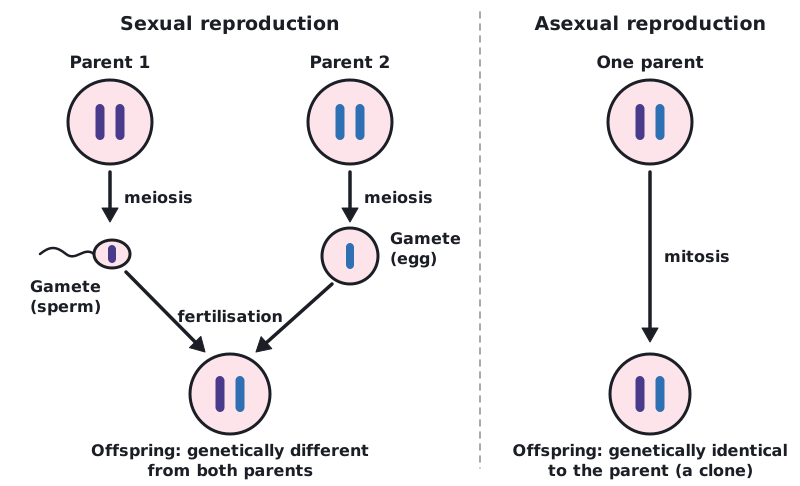 (opens full size in a new tab)
Written and checked against the Edexcel IGCSE Biology (4BI1) specification · Updated October 2026