
FermentersSpec 21.2.6, 21.2.7
In short
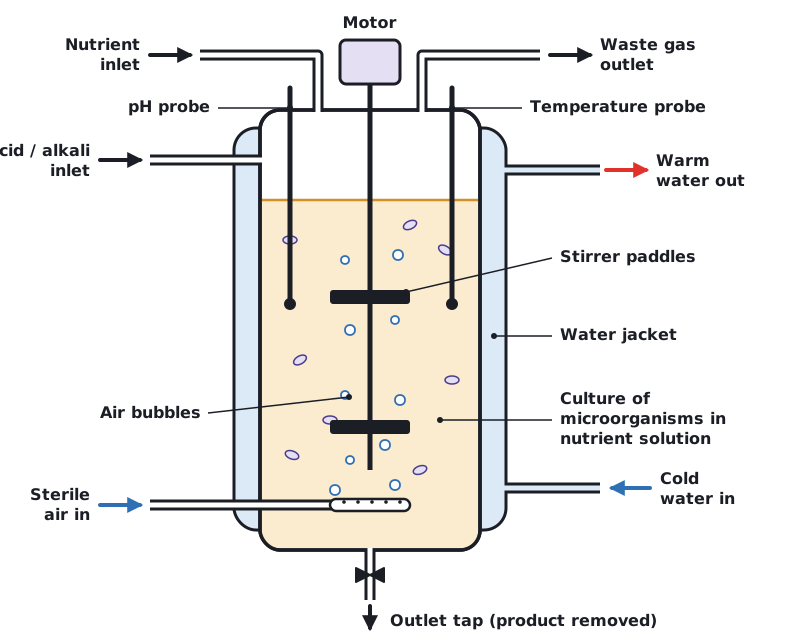
A fermenter is a large container in which bacteria or fungi are grown in large numbers to make a useful product, such as insulin, penicillin or mycoprotein. Temperature and pH are kept at the optimum for the microorganisms' enzymes, sterile air supplies oxygen for aerobic respiration, nutrients are added, and waste products are removed, giving a high yield.
A fermenter is a large container in which bacteria or fungi are grown in large numbers to make a useful product. Conditions are controlled so that the microorganisms grow and make the product as fast as possible, giving a high yield.
| Product | Made by | Use |
|---|---|---|
| Insulin | Genetically modified bacteria | Treating diabetes |
| Penicillin | The fungus Penicillium | An antibiotic that kills bacteria |
| Mycoprotein | The fungus Fusarium | A protein-rich food for humans |
 (opens full size in a new tab)
Conditions that are controlled
| Condition | How it is controlled | Why |
|---|---|---|
| Temperature | Cooling water in a water jacket, checked by a temperature probe | Keeps the temperature at the optimum for the enzymes of the microorganisms. If too low, reactions are slow; if too high, enzymes are denatured. Respiration releases heat that must be removed |
| pH | pH probe; acid or alkali is added | Keeps the pH at the optimum for the enzymes. A wrong pH changes the shape of the active site and denatures enzymes |
| Oxygen | Sterile air is pumped in; the stirrer spreads it through the liquid | Needed for aerobic respiration, which releases energy for growth and making the product |
| Nutrient supply | Nutrients such as a sugar (glucose) and minerals are added | Provide the energy source and the raw materials for growth and for making the product |
| Waste products | Waste gases, such as carbon dioxide, leave through an outlet; stirring stops waste building up in one place | A build-up of waste (such as carbon dioxide or other toxic substances) could poison the microorganisms or change the pH |
For 'describe and explain' on a fermenter condition, give how it is controlled and why. Link temperature and pH to enzymes, and oxygen to aerobic respiration.
Quick check
Give two reasons why bacteria are useful in biotechnology.
Show answer
They reproduce rapidly; they can make complex molecules (such as proteins).
Which gas makes bread dough rise?
Show answer
Carbon dioxide, from anaerobic respiration in yeast.
What does pectinase do in fruit juice production?
Show answer
Breaks down pectin in cell walls, so more juice is released and it is clearer.
Supplement What does lactase break lactose into?
Show answer
Glucose and galactose.
Supplement Why is oxygen supplied to a fermenter?
Show answer
For aerobic respiration, to release energy for growth and making the product.
Written and checked against the Cambridge IGCSE Biology (0610) specification · Updated October 2026