
Chromosomes, genes and allelesSpec 17.1.1, 17.1.2, 17.1.3
In short
A gene is a length of DNA that codes for a protein, and an allele is an alternative form of a gene. Chromosomes in the nucleus are made of DNA, and every gene has a fixed position on a chromosome. Different alleles, such as for red or white flowers, have slightly different DNA, so they code for slightly different proteins.
The nucleus of a cell contains chromosomes. Chromosomes are made of DNA, and the DNA contains genetic information in the form of genes.
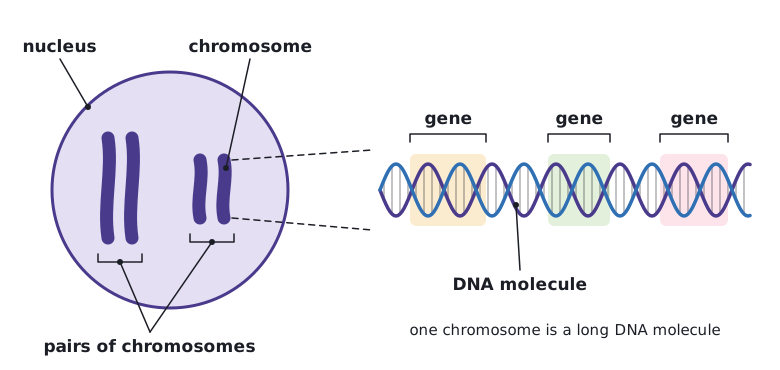 (opens full size in a new tab)
- Gene
- A length of DNA that codes for a protein.
- Allele
- An alternative form of a gene.
Every gene has a fixed position on a chromosome. Many genes exist in more than one form. For example, the gene for flower colour may have an allele for red flowers and a different allele for white flowers. Different alleles of the same gene have slightly different DNA, so they can code for slightly different proteins.
| Term | What it is |
|---|---|
| Chromosome | a structure in the nucleus made of DNA |
| DNA | the molecule that contains the genetic information |
| Gene | a length of DNA that codes for a protein |
| Allele | an alternative form of a gene |
A gene is not the same as an allele. Write that an allele is an alternative form of a gene. Do not say a gene is a 'section of a chromosome' without saying it codes for a protein.
Written and checked against the Cambridge IGCSE Biology (0610) specification · Updated October 2026