
Plant and animal cellsSpec 2.1.1, 2.1.3, 2.1.4
In short
Plant and animal cells both have a cell membrane, cytoplasm, a nucleus, ribosomes and mitochondria. Plant cells also have a cellulose cell wall that strengthens the cell, chloroplasts that absorb light energy for photosynthesis, and a large vacuole containing cell sap. The cell wall is fully permeable, while the cell membrane controls what enters and leaves.
Plant and animal cells share many structures. Both have a cell membrane, cytoplasm, a nucleus, ribosomes and mitochondria. Plant cells also have a cell wall, chloroplasts (in the parts of the plant exposed to light) and a large vacuole containing cell sap (a solution of sugars and salts).
| Structure | Function | Animal cell | Plant cell |
|---|---|---|---|
| Cell membrane | Controls the movement of substances into and out of the cell | Yes | Yes |
| Cytoplasm | Where most chemical reactions happen | Yes | Yes |
| Nucleus | Contains the genetic material (DNA) and controls the activities of the cell | Yes | Yes |
| Ribosomes | Make proteins (protein synthesis) | Yes | Yes |
| Mitochondria | Where aerobic respiration takes place, releasing energy | Yes | Yes |
| Cell wall | Made of cellulose; strengthens the cell and supports it | No | Yes |
| Chloroplasts | Contain chlorophyll, which absorbs light energy for photosynthesis | No | Yes (in cells exposed to light) |
| Vacuole | Contains cell sap; helps keep the cell firm | Small vacuoles only, if any | Yes, one large vacuole |
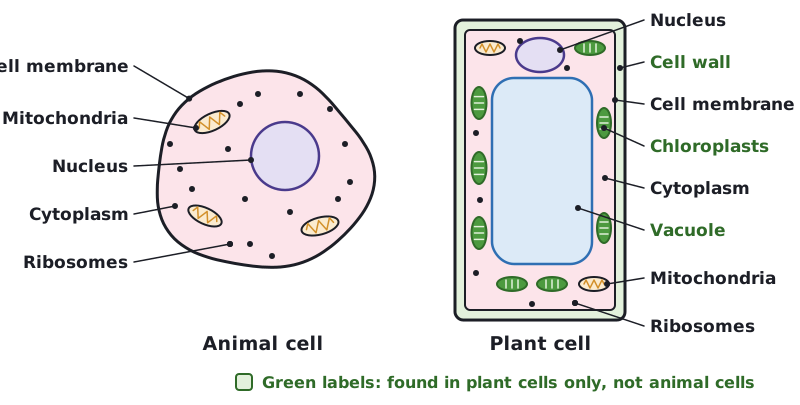 (opens full size in a new tab)
The cell wall is not the same as the cell membrane. The wall is a tough, fully permeable outer layer in plant cells. The membrane is thin, is found in every cell and controls what enters and leaves.
To compare, name a structure that both have, then a structure only one has. Saying 'plant cells have a cell wall, animal cells do not' earns the mark. Saying 'plant cells have more' does not.
Written and checked against the Cambridge IGCSE Biology (0610) specification · Updated October 2026