
The menstrual cycle and pregnancy hormonesSpec 16.5.2, 16.5.3, 16.5.4
In short
The menstrual cycle is a series of changes in the ovaries and the lining of the uterus that repeats about every 28 days. Menstruation happens on days 1 to 5, the lining is repaired and thickens, and ovulation occurs around day 14. FSH matures an egg, LH causes ovulation, and oestrogen and progesterone build and maintain the lining.
The menstrual cycle is a series of changes in the ovaries and in the lining of the uterus. It repeats about every 28 days.
| Stage | Days | Change in the ovary and the uterus lining |
|---|---|---|
| Menstruation | 1 to 5 | The lining of the uterus breaks down and is lost through the vagina with blood |
| Repair | 5 to 14 | An egg cell matures in an ovary. The uterus lining is repaired and thickens |
| Ovulation | Around 14 | An egg cell is released from an ovary into the oviduct |
| Maintenance | 14 to 28 | The lining stays thick, ready for an embryo. If there is no pregnancy, the lining breaks down and the cycle starts again |
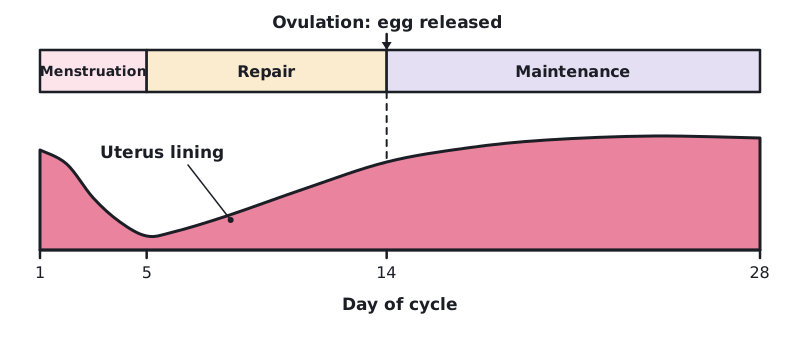 (opens full size in a new tab)
Supplement (what this means)
Supplement: only for the Extended papers (2 and 4). Core students can skip it. What the labels meanWhere the hormones are made
Supplement (what this means)
Supplement: only for the Extended papers (2 and 4). Core students can skip it. What the labels mean| Hormone | In the menstrual cycle | In pregnancy |
|---|---|---|
| Oestrogen | Ovaries | Placenta |
| Progesterone | Ovaries (the empty follicle after ovulation, the corpus luteum) | Placenta |
| FSH and LH | Pituitary gland | Pituitary gland, but their release is inhibited by progesterone |
Supplement (what this means)
Supplement: only for the Extended papers (2 and 4). Core students can skip it. What the labels meanHow hormones control the cycle
Supplement (what this means)
Supplement: only for the Extended papers (2 and 4). Core students can skip it. What the labels mean| Hormone | Role |
|---|---|
| FSH | Causes an egg cell to mature in the ovary. Stimulates the ovary to make oestrogen |
| Oestrogen | Repairs and thickens the uterus lining. Inhibits FSH. Stimulates the release of LH |
| LH | Causes ovulation (release of the egg cell) around day 14 |
| Progesterone | Maintains the thickness of the uterus lining. Inhibits FSH and LH |
Supplement (what this means)
Supplement: only for the Extended papers (2 and 4). Core students can skip it. What the labels mean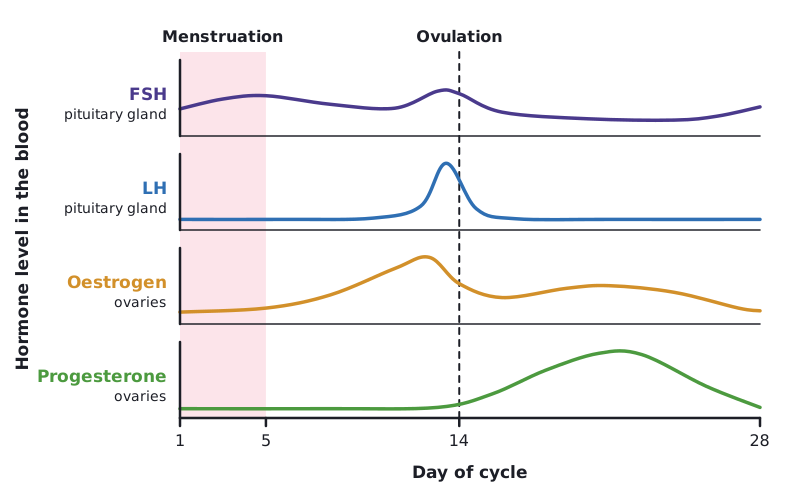 (opens full size in a new tab)
Supplement (what this means)
Supplement: only for the Extended papers (2 and 4). Core students can skip it. What the labels meanHormones in pregnancy
Supplement (what this means)
Supplement: only for the Extended papers (2 and 4). Core students can skip it. What the labels meanIf an embryo implants, the placenta makes progesterone (and oestrogen). High progesterone keeps the uterus lining in place, so there is no menstruation. It also inhibits FSH and LH, so no more egg cells mature or are released during pregnancy. If there is no pregnancy, progesterone falls and the lining breaks down.
Supplement (what this means)
Supplement: only for the Extended papers (2 and 4). Core students can skip it. What the labels meanSay what each hormone does to the next one: 'stimulates' or 'inhibits'. Writing 'oestrogen affects LH' will not score. When you read a hormone graph, quote the day and say whether the level rises, falls or peaks.
Quick check
Which hormone is made in the testes?
Show answer
Testosterone.
Name two secondary sexual characteristics that oestrogen causes in girls.
Show answer
Any two from: breast development, pubic and underarm hair, wider hips, start of the menstrual cycle.
What happens to the uterus lining during menstruation?
Show answer
It breaks down and is lost through the vagina with blood.
Supplement Which hormone causes ovulation?
Show answer
LH.
Supplement Name the organ that makes progesterone in pregnancy.
Show answer
The placenta.
Written and checked against the Cambridge IGCSE Biology (0610) specification · Updated October 2026