Book a tutor

Viruses

Characteristics and classification of living organisms · Features of organisms · note 5 of 5

Spec 1.3.7
Supplement (what this means)Supplement: only for the Extended papers (2 and 4). Core students can skip it. What the labels mean
Download all Features of organisms notes (PDF)Download all notes (PDF)8 pages

VirusesSpec 1.3.7

In short

A virus is a particle much smaller than a bacterium that is not made of cells, so it does not fit into the five kingdoms. Its features are limited to two: a protein coat, which surrounds and protects the genetic material, and the genetic material inside it, which carries the instructions for making new viruses.

A virus is much smaller than a bacterium. Viruses are not made of cells, so they do not fit into the five kingdoms. The features of a virus are limited to two: a protein coat and genetic material.

Features of a virus
PartDescription
Protein coatSurrounds and protects the genetic material
Genetic materialCarries the instructions for making new viruses; inside the protein coat
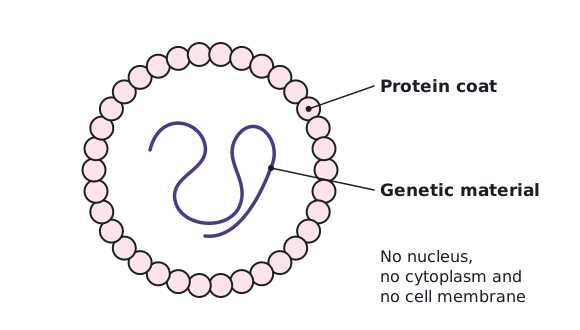
A virus particle in cross-section: a protein coat surrounding a strand of genetic material, with a note that there is no nucleus, no cytoplasm and no cell membrane. (opens full size in a new tab)
A virus has only a protein coat and genetic material.
Exam tip:

Do not describe a virus as having a nucleus, cytoplasm or cell membrane. State protein coat and genetic material, and nothing else.

Quick check

  1. State two features of plants that animals do not have.

    Show answer

    Cell walls made of cellulose; chloroplasts (so they photosynthesise).

  2. Name the four groups of arthropods.

    Show answer

    Myriapods, insects, arachnids and crustaceans.

  3. Name the five groups of vertebrates.

    Show answer

    Mammals, birds, reptiles, amphibians and fish.

  4. Supplement Name the five kingdoms.

    Show answer

    Animal, plant, fungus, prokaryote and protoctist.

  5. Supplement State the two features of a virus.

    Show answer

    A protein coat and genetic material.

Written and checked against the Cambridge IGCSE Biology (0610) specification · Updated October 2026

Frequently asked questions

How do you tell a plant from an animal in classification?

Plants have cellulose cell walls and chloroplasts and make their own food by photosynthesis; animals have no cell walls or chloroplasts and feed on other organisms. Both are multicellular. Plants store carbohydrate as starch and animals store glycogen, and animals usually have a nervous system while plants do not.

What is the difference between insects and arachnids?

Insects have a body in three parts (head, thorax and abdomen), three pairs of legs, one pair of antennae and usually two pairs of wings. Arachnids, such as spiders, have a body in two parts (cephalothorax and abdomen), four pairs of legs and no antennae or wings. Both are arthropods with jointed legs.

How do you tell reptiles and amphibians apart?

Reptiles have dry skin covered with scales and lay eggs with soft, leathery shells, and most live on land. Amphibians have moist, smooth skin without scales and lay jelly-covered eggs in water. Amphibian larvae, called tadpoles, live in water, while the adults often live on land.

All 5 questions on Features of organisms

Finished features of organisms? Test yourself:Exam questionsFlashcards