
Protecting the breathing systemSpec 11.1.11
In short
The breathing system is protected by goblet cells and ciliated cells lining the trachea and bronchi. Goblet cells make and release mucus, a sticky liquid that traps pathogens and particles from the air. Ciliated cells have cilia that beat to move the mucus up and away from the lungs towards the throat, where it is swallowed.
The air you breathe in contains dust and particles, and microorganisms that cause disease (pathogens). The lining of the trachea and bronchi has two types of cell, goblet cells and ciliated cells, that protect the lungs from these.
| Cell or substance | Role |
|---|---|
| Goblet cells | Make and release mucus |
| Mucus | Sticky liquid that traps pathogens and particles from the air |
| Ciliated cells | Have tiny hair-like projections called cilia that beat to move the mucus, with the trapped pathogens and particles, up and away from the lungs towards the throat, where it is swallowed |
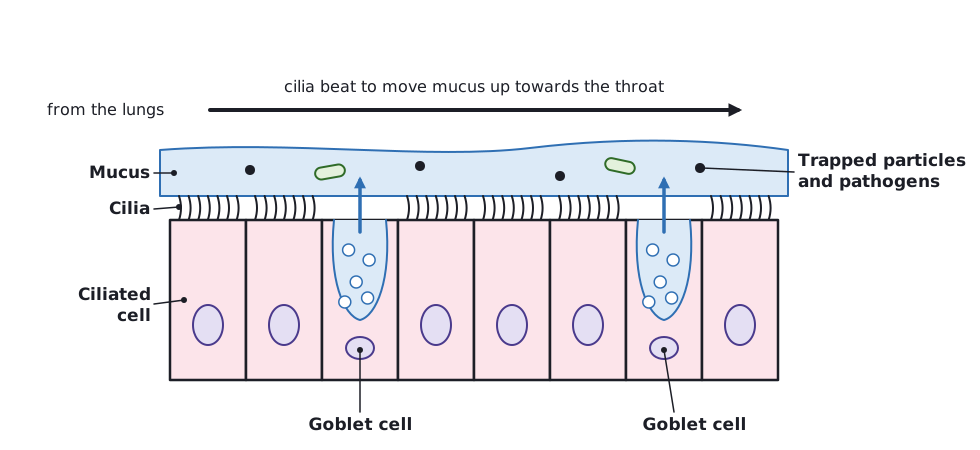 (opens full size in a new tab)
A full answer links the three parts: goblet cells make mucus, mucus traps the pathogens and particles, and cilia move the mucus away from the lungs.
Quick check
Name the tubes that carry air into each lung.
Show answer
Bronchi.
State the four features of a gas exchange surface in humans.
Show answer
Large surface area, thin surface, good blood supply and good ventilation with air.
Which gas turns limewater cloudy?
Show answer
Carbon dioxide.
Supplement What happens to the pressure in the thorax when the diaphragm contracts?
Show answer
It decreases, because the volume of the thorax increases.
Supplement State the function of cartilage in the trachea.
Show answer
It supports the trachea and keeps it open.
Written and checked against the Cambridge IGCSE Biology (0610) specification · Updated October 2026