
How bacteria are modified to make a human proteinSpec 21.3.3
In short
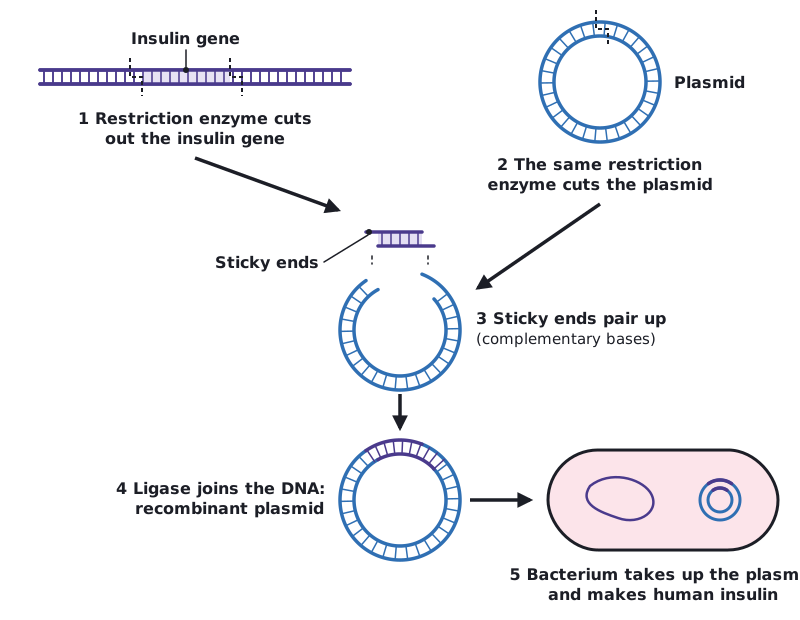
Bacteria are genetically modified to make human insulin by cutting the human gene out of DNA with restriction enzymes, which leave sticky ends. A plasmid is cut with the same restriction enzymes, and DNA ligase joins the gene into it, forming a recombinant plasmid. This is inserted into bacteria, which multiply and express the gene, making the human protein.
Human insulin can be made by bacteria. The same process can be used for other human proteins.
- Isolate the gene. The DNA making up the human gene is cut out of human DNA using restriction enzymes. These cut the DNA leaving sticky ends (short single-stranded overhangs).
- Cut the plasmid. A bacterial plasmid is cut open using the same restriction enzymes, which forms complementary sticky ends.
- Insert the gene. The human gene is joined into the plasmid using the enzyme DNA ligase, which joins the sticky ends. This forms a recombinant plasmid.
- Put into bacteria. The recombinant plasmids are inserted into bacteria (specific details of how are not required).
- Multiply. The bacteria containing the recombinant plasmids are grown and multiply, so there are many copies of the gene.
- Expression. The human gene is expressed in the bacteria, which make the human protein.
 (opens full size in a new tab)
Common mistake:
Restriction enzymes cut DNA, and ligase joins DNA. Do not swap them. The same restriction enzyme is used on the gene and the plasmid so the sticky ends match.
Written and checked against the Cambridge IGCSE Biology (0610) specification · Updated October 2026