Book a tutor

Antigens, antibodies and active immunity

Diseases and immunity · Immunity · note 1 of 3

Spec 10.1.6, 10.1.7, 10.1.8, 10.1.9, 10.1.10
Supplement (what this means)Supplement: only for the Extended papers (2 and 4). Core students can skip it. What the labels mean
Download all Immunity notes (PDF)Download all notes (PDF)5 pages

Antigens, antibodies and active immunitySpec 10.1.6, 10.1.7, 10.1.8, 10.1.9, 10.1.10

In short

Active immunity is defence against a pathogen by antibody production in the body, gained after an infection or by vaccination. Antibodies are proteins made by lymphocytes, each with a shape complementary to one specific antigen on a pathogen. Antibodies bind to antigens, which leads to direct destruction of the pathogen or marks it for phagocytes to destroy.

Each pathogen has its own antigens. Antigens are molecules on the surface of the pathogen, and they have specific shapes.

Antibodies are proteins made by white blood cells (lymphocytes). An antibody has a shape that is complementary to one specific antigen, so it fits that antigen and no others. This means that a different antibody is needed for each pathogen.

Antibodies bind to antigens. This leads to either direct destruction of the pathogens or marking of the pathogens so that phagocytes destroy them.

Active immunity is defence against a pathogen by antibody production in the body. It is gained in two ways:

  • after an infection by a pathogen (the body makes antibodies and recovers)
  • by vaccination
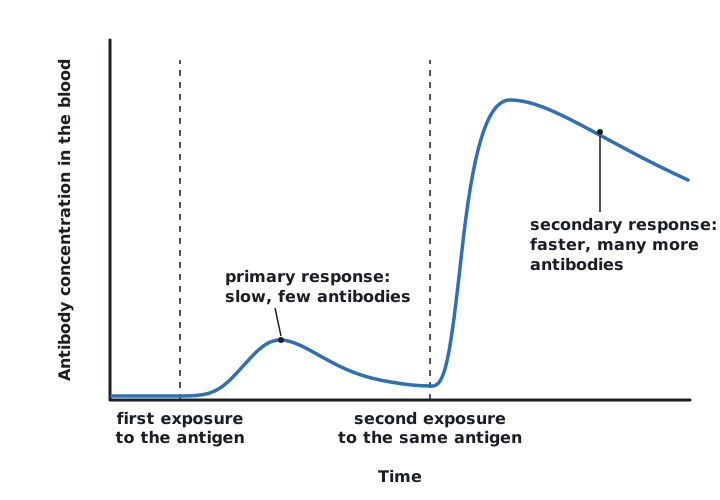
Graph of antibody concentration over time showing a slow, small primary response and a fast, larger secondary response (opens full size in a new tab)
Memory cells made after the first exposure make the secondary response faster and bigger than the primary response.
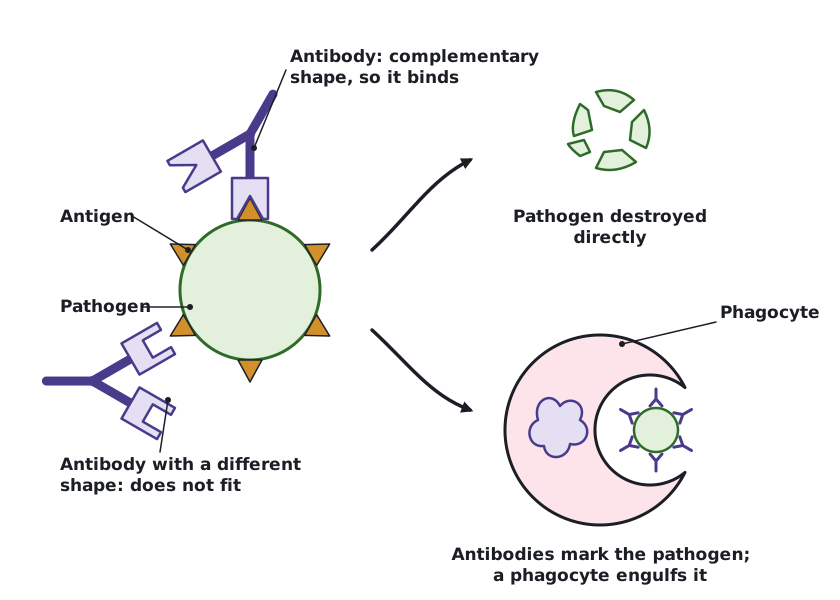
A pathogen with antigens on its surface: an antibody with a complementary shape binds to an antigen, while an antibody with a different shape does not fit. Two outcomes are shown: the pathogen is destroyed directly, or antibodies mark the pathogen and a phagocyte engulfs it. (opens full size in a new tab)
Each antibody is complementary to one antigen. Binding leads to direct destruction of the pathogen or marks it for destruction by phagocytes.
Exam tip:

Use the word 'complementary' for the shape of antibody and antigen. An antibody is specific to one antigen.

Written and checked against the Cambridge IGCSE Biology (0610) specification · Updated October 2026

Frequently asked questions

How do vaccines work?

Vaccines work by putting weakened pathogens or their antigens into the body. The antigens stimulate lymphocytes to produce antibodies, and memory cells are made that give long-term immunity. If the real pathogen enters later, the memory cells respond quickly and make large amounts of antibody. Vaccines contain antigens, not antibodies.

Why do pathogens have antigens?

Antigens are molecules on the surface of every pathogen, and each pathogen has its own antigens with specific shapes. The body's lymphocytes make antibodies with a shape complementary to one specific antigen, so the antibody fits that antigen and no others. This is why a different antibody is needed for each pathogen.

What is the difference between active and passive immunity?

In active immunity, a person's own lymphocytes make antibodies after an infection or vaccination, and memory cells give long-term protection. In passive immunity, antibodies are acquired from another individual, such as across the placenta or in breast milk. No memory cells are produced, so passive immunity is only short-term.

All 5 questions on Immunity