
Investigating the need for chlorophyll, light and carbon dioxideSpec 6.1.7
In short
Testing a leaf for starch shows whether it has photosynthesised, because glucose made in photosynthesis is converted to starch. The plant is destarched in the dark for 24 to 48 hours first. The leaf is boiled, then heated in ethanol to remove the chlorophyll, and iodine turns from orange-brown to blue-black where starch is present.
To show that chlorophyll, light and carbon dioxide are needed for photosynthesis, test leaves for starch. Glucose made in photosynthesis is converted to starch, so starch in a leaf is evidence that photosynthesis has taken place.
Destarching
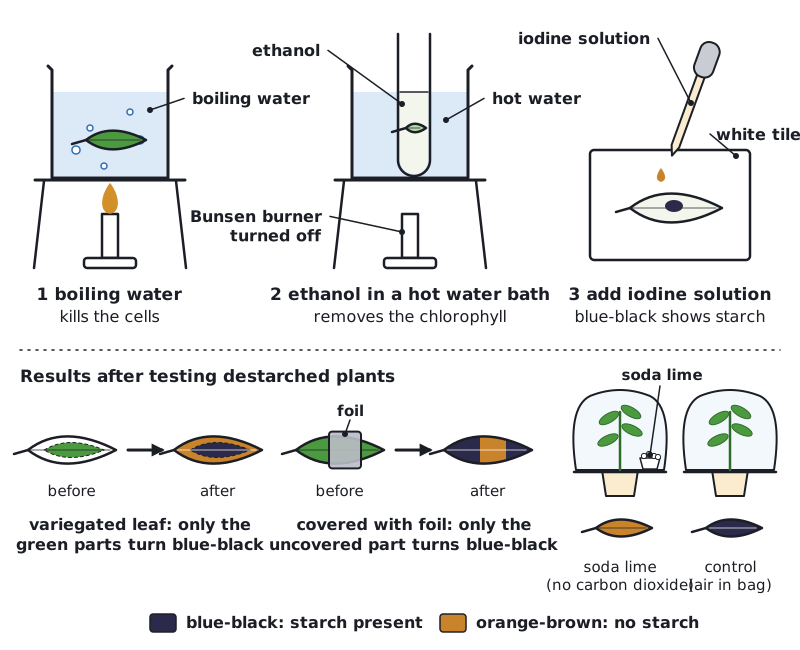
Before each investigation, destarch the plant by leaving it in the dark for 24 to 48 hours. The plant uses up its stores of starch in respiration. Leaves from a destarched plant test negative for starch.
The starch test on a leaf
- Drop the leaf into boiling water for about 30 seconds. This kills the cells and softens the leaf.
- Turn off the Bunsen burner. Put the leaf in a boiling tube of ethanol and stand the tube in a beaker of hot water for several minutes. The ethanol removes the chlorophyll, so the leaf turns pale.
- Dip the leaf back into the hot water to soften it, then spread it out on a white tile.
- Add a few drops of iodine solution. Starch turns the iodine from orange-brown to blue-black.
Investigating each requirement
| To investigate | Method | Control | Result |
|---|---|---|---|
| Chlorophyll | Use a variegated leaf (green and white patches). Destarch, expose to light, then test for starch. | The green parts of the same leaf | Only the green parts, which contain chlorophyll, turn blue-black. The white parts stay orange-brown. |
| Light | Cover part of a destarched leaf with foil or black paper, leave the plant in the light, then test for starch. | The uncovered part of the same leaf | The uncovered part turns blue-black. The covered part stays orange-brown. |
| Carbon dioxide | Put a destarched plant in a sealed bag or bell jar with soda lime (or potassium hydroxide), which absorbs carbon dioxide, and leave in the light. Test a leaf for starch. | An identical plant sealed in a bag with no soda lime | The leaf without carbon dioxide stays orange-brown. The control leaf turns blue-black. |
Use a control so that only one factor changes. In the variegated leaf and foil investigations the control is part of the same leaf, so everything else is identical. Ethanol is flammable: switch off the Bunsen burner before heating it, use a hot water bath, and wear eye protection.
If a question asks why the leaf was heated in ethanol, the answer is to remove (decolourise) the chlorophyll so the colour change with iodine can be seen.
 (opens full size in a new tab)
Written and checked against the Cambridge IGCSE Biology (0610) specification · Updated October 2026