
Excretion, the lungs and the urinary systemSpec 13.1.1, 13.1.2, 13.1.3, 13.1.4
In short
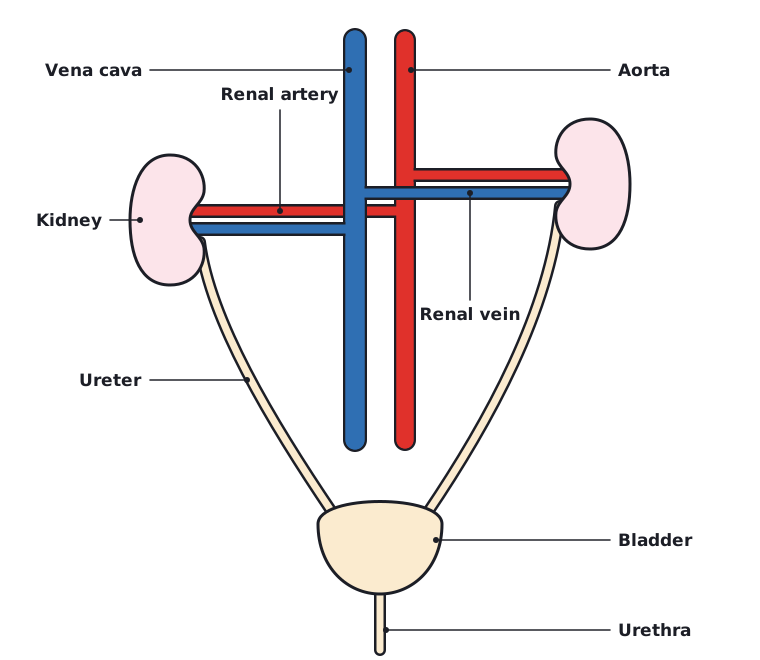
Excretion is the removal of the waste products of metabolism and substances in excess of requirements. The lungs excrete carbon dioxide made in respiration, and the kidneys excrete urea, excess water and excess ions in urine. Urine passes from the kidneys down the ureters to the bladder, where it is stored, then leaves through the urethra.
Excretion is the removal of the waste products of metabolism and substances in excess of requirements. Waste products are made by the chemical reactions inside cells. If they build up, they can harm the body.
Carbon dioxide is made in cells during respiration. It is carried in the blood to the lungs and leaves the body when you breathe out. So the lungs excrete carbon dioxide.
The kidneys excrete urea and excess water and excess ions. These leave the body dissolved in urine.
| Organ | Substances excreted |
|---|---|
| Lungs | Carbon dioxide |
| Kidneys | Urea, excess water and excess ions |
The urinary system
| Part | Function |
|---|---|
| Kidneys | Filter the blood and make urine |
| Renal artery | Brings blood to the kidney |
| Renal vein | Takes blood away from the kidney |
| Ureters | Tubes that carry urine from the kidneys to the bladder |
| Bladder | Stores urine |
| Urethra | Tube that carries urine out of the body |
 (opens full size in a new tab)
Do not mix up the ureter and the urethra. The ureter goes from the kidney to the bladder. The urethra goes from the bladder out of the body.
Supplement (what this means)
Supplement: only for the Extended papers (2 and 4). Core students can skip it. What the labels meanInside the kidney
Supplement (what this means)
Supplement: only for the Extended papers (2 and 4). Core students can skip it. What the labels meanA section through a kidney shows two main regions. The cortex is the outer region. The medulla is the inner region. The ureter leaves the kidney, and the renal artery and renal vein join it.
Supplement (what this means)
Supplement: only for the Extended papers (2 and 4). Core students can skip it. What the labels mean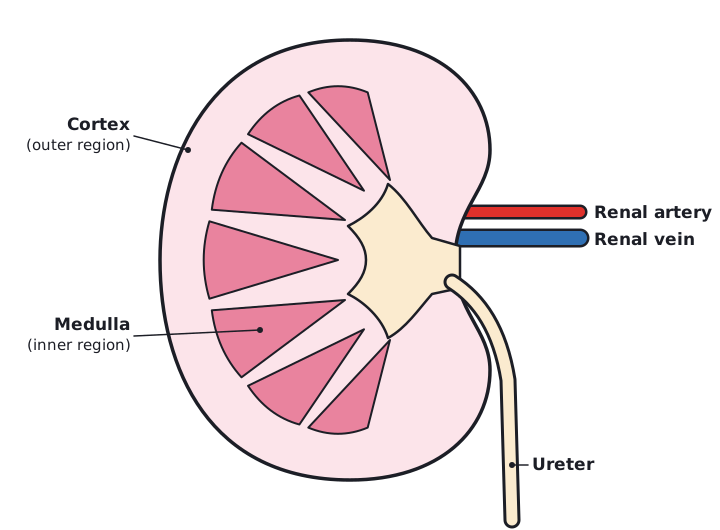 (opens full size in a new tab)
Supplement (what this means)
Supplement: only for the Extended papers (2 and 4). Core students can skip it. What the labels meanCortex is the outer region and medulla is the inner region. In a diagram question, look at which region is on the outside.
Written and checked against the Cambridge IGCSE Biology (0610) specification · Updated October 2026