
Water and osmosisSpec 3.2.1, 3.2.2, 3.2.3, 3.2.6
In short
Osmosis is the diffusion of water through a partially permeable membrane, which lets small molecules such as water through but not larger ones such as sucrose. Water is also a solvent, which matters for digestion, excretion and transport. Plant cells take in water by osmosis, and water pressing outwards on the cell wall makes the cells firm, supporting the plant.
Water as a solvent
Water is a solvent: many substances dissolve in it. This is important in organisms in three ways.
- Digestion: food molecules dissolve in water so enzymes can break them down and the products can be absorbed.
- Excretion: waste substances such as urea dissolve in water and are removed in urine.
- Transport: substances dissolve in the water of blood plasma (animals) and of sap in xylem and phloem (plants) and are carried around the organism.
Osmosis
Water diffuses through partially permeable membranes by osmosis. A partially permeable membrane lets small molecules such as water through, but not larger molecules such as sucrose or proteins. Water moves into and out of cells by osmosis through the cell membrane.
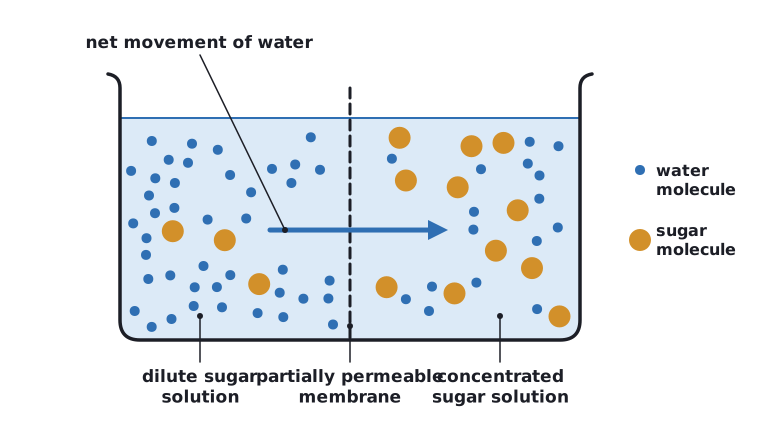 (opens full size in a new tab)
Osmosis is only about water. Do not write that 'sugar moves by osmosis' or that osmosis is 'water moving through any membrane'.
Support in plants
Plant cells take in water by osmosis. The water inside the cells presses outwards on the cell wall. This pressure of water pushes the cell wall outwards and makes the cells firm. The firm cells support the plant, especially the stems and leaves of non-woody plants.
If a plant loses water, the pressure falls, the cells become soft and the plant wilts.
For plant support, say 'water pressing outwards on the cell wall'. 'The water makes the cell stiff' alone does not gain the mark.
Written and checked against the Cambridge IGCSE Biology (0610) specification · Updated October 2026