
Book a tutor

Cholera

Diseases and immunity · Pathogens and transmission · note 4 of 4

Spec 10.1.16, 10.1.17
Supplement (what this means)Supplement: only for the Extended papers (2 and 4). Core students can skip it. What the labels mean
Download all Pathogens and transmission notes (PDF)Download all notes (PDF)5 pages

CholeraSpec 10.1.16, 10.1.17

In short

Cholera is a disease caused by a bacterium transmitted in contaminated water. The bacterium produces a toxin in the small intestine that makes the cells lining it secrete chloride ions. This lowers the water potential in the gut, so water moves in from the blood by osmosis, causing diarrhoea, dehydration and loss of ions from the blood.

Cholera is a disease caused by a bacterium. It is transmitted in contaminated water, so it spreads where drinking water is not clean or sewage is not treated.

The cholera bacterium lives in the small intestine and produces a toxin. The toxin has these effects:

  1. The toxin causes cells lining the small intestine to secrete chloride ions into the small intestine.
  2. The chloride ions lower the water potential in the gut, so water moves into the gut from the blood by osmosis.
  3. The extra water causes diarrhoea.
  4. Large amounts of water and ions are lost from the body, so the person becomes dehydrated and loses ions from the blood.
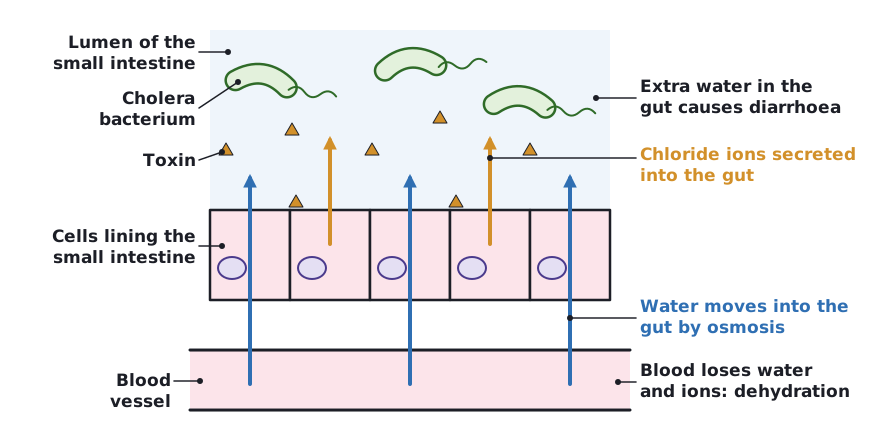
Section through the small intestine wall: cholera bacteria in the lumen release toxin onto the lining cells, chloride ions are secreted into the gut, water moves from the blood vessel into the gut by osmosis causing diarrhoea, and the blood loses water and ions causing dehydration. (opens full size in a new tab)
The cholera toxin makes lining cells secrete chloride ions into the gut, so water follows by osmosis, causing diarrhoea and dehydration.
Exam tip:

Put the sequence in order: toxin, chloride ions secreted, water moves in by osmosis, diarrhoea. Name osmosis.

Quick check

  1. What is a pathogen?

    Show answer

    A disease-causing organism.

  2. What is a transmissible disease?

    Show answer

    A disease in which the pathogen can be passed from one host to another.

  3. Name the body defences in the syllabus.

    Show answer

    Skin, hairs in the nose, mucus, stomach acid and white blood cells.

  4. Supplement Which route of transmission is cholera associated with?

    Show answer

    Contaminated water.

Written and checked against the Cambridge IGCSE Biology (0610) specification · Updated October 2026

Frequently asked questions

How do pathogens spread?

Pathogens spread by direct contact or indirectly. Direct contact includes blood and other body fluids passing from one person to another, for example through a cut. Indirect routes are contaminated surfaces such as door handles, contaminated food and water, animals such as mosquitoes, and tiny droplets in the air from coughs and sneezes.

How does the body stop pathogens getting in?

The skin forms a tough barrier that stops pathogens entering the body. Hairs in the nose and sticky mucus in the airways trap pathogens so they can be removed, and stomach acid kills most pathogens swallowed in food and drink. White blood cells then destroy any pathogens that do get inside the body.

Why is clean water important for preventing disease?

Clean water is important because drinking water can carry pathogens. Treating the water supply removes them and stops water-borne diseases such as cholera from spreading. Sewage treatment also matters, because sewage contains pathogens from human faeces, and treating it stops them contaminating drinking water or food crops.

All 4 questions on Pathogens and transmission

Finished pathogens and transmission? Test yourself:Exam questionsFlashcards