
Gametes and fertilisationSpec 16.4.3, 16.4.4, 16.4.5, 16.4.6
In short
Fertilisation is the fusion of the nuclei from a male gamete (sperm) and a female gamete (egg cell), forming a zygote. Sperm are adapted with a flagellum to swim, many mitochondria to release energy, and enzymes in the acrosome to digest through the jelly coat. Egg cells have energy stores and a jelly coat that changes after fertilisation.
In humans, fertilisation is the fusion of the nuclei from a male gamete (sperm) and a female gamete (egg cell). The fertilised egg is called a zygote.
Adaptive features of sperm
| Feature | How it helps |
|---|---|
| Flagellum (tail) | Whips from side to side to move the sperm towards the egg cell |
| Many mitochondria | Release energy by aerobic respiration for the flagellum to move |
| Enzymes in the acrosome | Digest a way through the jelly coat around the egg cell so the sperm nucleus can enter |
Adaptive features of egg cells
| Feature | How it helps |
|---|---|
| Energy stores (in the cytoplasm) | Supply energy for the zygote and early embryo until it implants in the uterus |
| Jelly coat that changes at fertilisation | After one sperm has entered, the jelly coat changes so that no other sperm can get in. This makes sure only one sperm nucleus fuses with the egg nucleus |
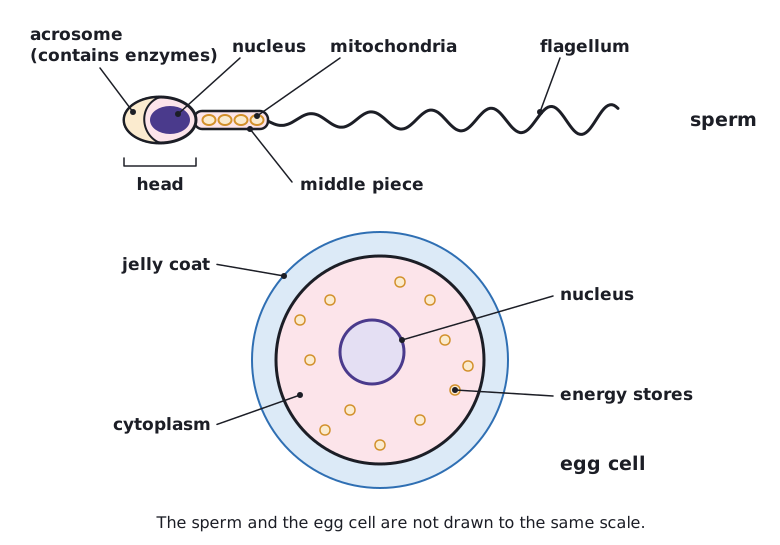 (opens full size in a new tab)
Comparing male and female gametes
| Feature | Sperm | Egg cell |
|---|---|---|
| Size | Very small | Much larger (one of the largest human cells) |
| Structure | Head with nucleus and acrosome, middle piece with mitochondria, flagellum | Nucleus, cytoplasm with energy stores, jelly coat |
| Motility | Can swim using the flagellum | Cannot move by itself; it is moved along the oviduct |
| Numbers | Millions made | Usually one released each month |
Exam tip:
For 'explain the adaptive features' questions, name the feature and then say how it helps: 'mitochondria, to release energy for swimming'.
Written and checked against the Cambridge IGCSE Biology (0610) specification · Updated October 2026