Book a tutor

Ferns, monocots and dicots

Characteristics and classification of living organisms · Features of organisms · note 4 of 5

Spec 1.3.5
Supplement (what this means)Supplement: only for the Extended papers (2 and 4). Core students can skip it. What the labels mean
Download all Features of organisms notes (PDF)Download all notes (PDF)8 pages

Ferns, monocots and dicotsSpec 1.3.5

In short

Ferns are plants with leaves called fronds that have no flowers and reproduce using spores, while flowering plants reproduce using seeds formed inside the ovary. Flowering plants divide into monocotyledons, with one cotyledon, parallel leaf veins and flower parts in threes, and dicotyledons, with two cotyledons, branching veins and flower parts in fours or fives.

The plant kingdom contains two groups that you need to know: ferns and flowering plants. Flowering plants are split again into monocotyledons (monocots) and dicotyledons (dicots).

Main features of the plant groups
GroupMain features
FernsLeaves called fronds; have roots, stems and leaves; no flowers; reproduce using spores, made on the underside of the fronds, not seeds
Flowering plantsProduce flowers; reproduce using seeds, which form inside the ovary of the flower

Monocotyledons and dicotyledons

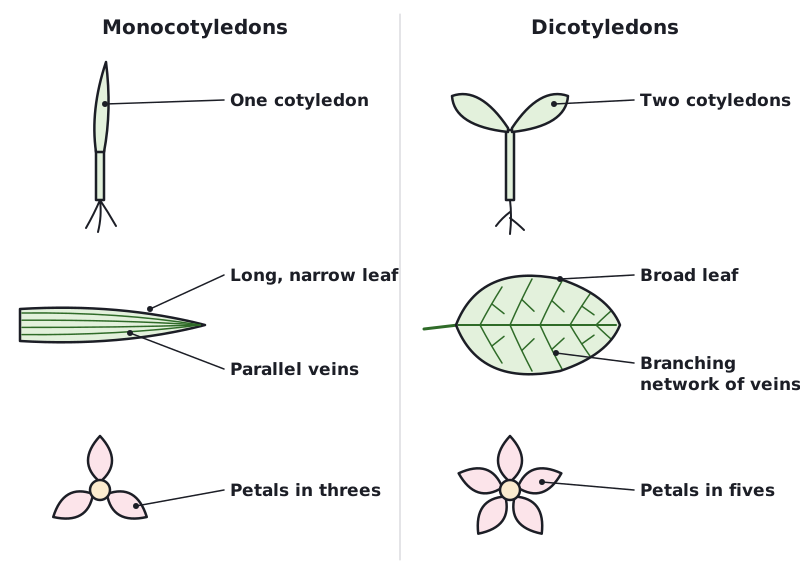
Comparing monocots and dicots
FeatureMonocotyledonsDicotyledons
Cotyledons (seed leaves)OneTwo
Leaf veinsParallelBranching network
Leaf shapeUsually long and narrowUsually broad
Flower partsIn threes or multiples of threeIn fours or fives, or multiples of four or five
ExamplesGrasses, wheat, maizeBeans, sunflower, oak
Monocotyledon and dicotyledon compared: one cotyledon, long narrow leaf with parallel veins and petals in threes, against two cotyledons, broad leaf with a branching network of veins and petals in fives. (opens full size in a new tab)
Monocots have one cotyledon and parallel veins; dicots have two cotyledons and a branching network of veins.
Exam tip:

Count the cotyledons first, because that gives the group its name. Leaf vein pattern is the quickest feature to use when you are shown a leaf.

Written and checked against the Cambridge IGCSE Biology (0610) specification · Updated October 2026

Frequently asked questions

How do you tell a plant from an animal in classification?

Plants have cellulose cell walls and chloroplasts and make their own food by photosynthesis; animals have no cell walls or chloroplasts and feed on other organisms. Both are multicellular. Plants store carbohydrate as starch and animals store glycogen, and animals usually have a nervous system while plants do not.

What is the difference between insects and arachnids?

Insects have a body in three parts (head, thorax and abdomen), three pairs of legs, one pair of antennae and usually two pairs of wings. Arachnids, such as spiders, have a body in two parts (cephalothorax and abdomen), four pairs of legs and no antennae or wings. Both are arthropods with jointed legs.

How do you tell reptiles and amphibians apart?

Reptiles have dry skin covered with scales and lay eggs with soft, leathery shells, and most live on land. Amphibians have moist, smooth skin without scales and lay jelly-covered eggs in water. Amphibian larvae, called tadpoles, live in water, while the adults often live on land.

All 5 questions on Features of organisms