
How genes control proteinsSpec 17.1.5, 17.1.6, 17.1.7, 17.1.8
In short
The sequence of bases in a gene determines the sequence of amino acids used to make a specific protein. The gene stays in the nucleus, and a copy called messenger RNA (mRNA) is made. The mRNA moves to the cytoplasm and passes through a ribosome, which assembles amino acids into the protein in the order set by the bases.
A gene is a length of DNA. DNA contains a sequence of bases. The sequence of bases in a gene determines the sequence of amino acids used to make a specific protein.
Amino acid sequence and protein shape
A protein is a chain of amino acids. Different sequences of amino acids make chains that fold into different shapes. Each protein has a shape that suits its job. If the sequence changes, the shape may change, and the protein may no longer work.
DNA controls cell function
DNA controls cell function by controlling the production of proteins. Examples of proteins include:
- enzymes, which control the chemical reactions in a cell
- membrane carriers, which move substances across the cell membrane
- receptors for neurotransmitters, which detect chemicals released at synapses
How a protein is made
The gene for a protein stays in the nucleus. A copy of the gene is made instead. This copy is called messenger RNA (mRNA).
- The gene coding for the protein remains in the nucleus.
- mRNA is made in the nucleus as a copy of the gene.
- The mRNA molecule moves out of the nucleus to the cytoplasm.
- The mRNA passes through a ribosome.
- The ribosome assembles amino acids into a protein molecule.
- The specific sequence of amino acids is determined by the sequence of bases in the mRNA.
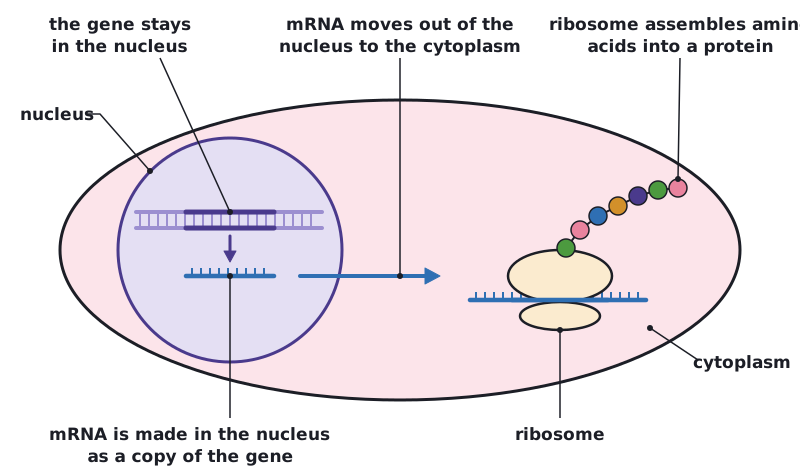 (opens full size in a new tab)
Learn the order: gene in nucleus, mRNA copy made, mRNA to cytoplasm, ribosome assembles amino acids. You do not need the details of transcription or translation.
Written and checked against the Cambridge IGCSE Biology (0610) specification · Updated October 2026