
Adaptive featuresSpec 18.2.1, 18.2.2
In short
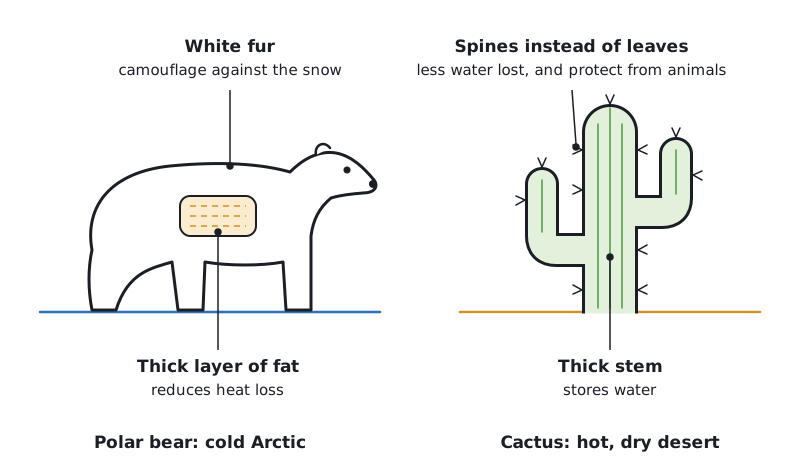
An adaptive feature is an inherited feature that helps an organism to survive and reproduce in its environment. It can be a body structure, a way the body works or a pattern of behaviour, but it must be inherited. For example, a polar bear's white fur gives camouflage and its thick fat layer gives insulation.
An adaptive feature is an inherited feature that helps an organism to survive and reproduce in its environment.
The feature can be a body structure, such as the shape of a beak, or a way the body works, such as producing concentrated urine to save water. It can also be a pattern of behaviour. It must be inherited, so a skill learned during life is not an adaptive feature.
 (opens full size in a new tab)
Interpreting a species
In the exam you are given a picture or some information about an organism. Link each feature to the environment and say how it helps survival or reproduction.
| Feature | How it helps |
|---|---|
| White fur (polar bear) | camouflage against the snow, so it is harder for prey to see it |
| Thick layer of fat (polar bear) | insulation, so less heat is lost |
| Spines instead of leaves (cactus) | smaller surface area, so less water is lost; protection from animals |
| Thick stem (cactus) | stores water for dry periods |
Use the pattern: feature, then what it does, then why that helps the organism survive. 'White fur camouflages the bear so it can creep up on seals' scores; 'white fur because it is cold' does not.
Written and checked against the Cambridge IGCSE Biology (0610) specification · Updated October 2026