
Translocation, sources and sinksSpec 8.4.1, 8.4.2, 8.4.3
In short
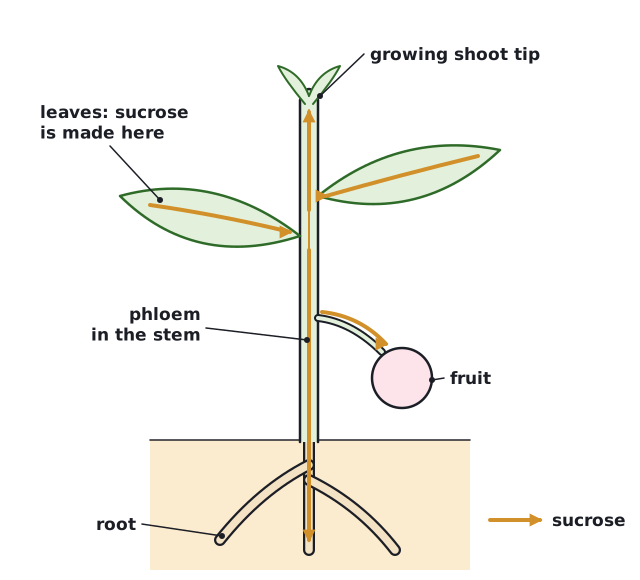
Translocation is the movement of sucrose and amino acids in the phloem from sources to sinks. A source is a part of the plant that releases sucrose or amino acids, such as a mature green leaf. A sink uses or stores them, such as a growing root tip or developing seed. A potato tuber can be both at different times.
Translocation is the movement of sucrose and amino acids in the phloem from sources to sinks.
- Source
- a part of the plant that releases sucrose or amino acids
- Sink
- a part of the plant that uses or stores sucrose or amino acids
 (opens full size in a new tab)
| Part of the plant | Source or sink | Why |
|---|---|---|
| Mature green leaf (in the light) | source | releases sucrose made in photosynthesis |
| Growing shoot tip or root tip | sink | uses sucrose for growth |
| Developing fruit or seed | sink | stores or uses sucrose |
| Storage organ such as a potato tuber, while the plant is photosynthesising | sink | stores the sucrose it receives (as starch) |
Some parts are both
A part of a plant can be a source at one time and a sink at another. A potato tuber receives sucrose while the plant is growing and photosynthesising, and stores it as starch, so it is a sink. When the tuber starts to grow new shoots, the starch is broken down and sucrose is released and moved to the growing shoots, so the same organ becomes a source.
A young leaf is a sink because it uses sucrose to grow. Once it is fully grown, it makes more sucrose than it uses, so it becomes a source.
Use 'releases' for a source and 'uses or stores' for a sink. Always say which direction sucrose moves: from source to sink.
Quick check
Supplement Define translocation.
Show answer
The movement of sucrose and amino acids in the phloem from sources to sinks.
Supplement What is a sink?
Show answer
A part of the plant that uses or stores sucrose or amino acids.
Supplement Give an example of a source.
Show answer
A fully grown green leaf.
Supplement Why can a tuber be both?
Show answer
It stores sucrose (as starch) as a sink, then releases sucrose as a source when new shoots grow.
Written and checked against the Cambridge IGCSE Biology (0610) specification · Updated October 2026