
Controlling blood glucoseSpec 14.3.5, 14.4.2, 14.4.4
In short
Blood glucose concentration is controlled by hormones from the pancreas acting on the liver. Insulin decreases blood glucose: it is secreted when glucose is too high, and the liver converts glucose to glycogen and stores it. Glucagon is secreted when glucose is too low, and the liver converts glycogen back to glucose and releases it into the blood.
The pancreas secretes the hormone insulin. Insulin decreases blood glucose concentration.
Supplement (what this means)
Supplement: only for the Extended papers (2 and 4). Core students can skip it. What the labels meanInsulin is secreted when the blood glucose concentration is too high, for example after a meal containing carbohydrate. The pancreas also secretes a second hormone, glucagon, when the blood glucose concentration is too low.
Supplement (what this means)
Supplement: only for the Extended papers (2 and 4). Core students can skip it. What the labels meanThe role of the liver
Supplement (what this means)
Supplement: only for the Extended papers (2 and 4). Core students can skip it. What the labels meanThe liver controls blood glucose concentration by storing and releasing glucose. It stores glucose as glycogen. Insulin and glucagon both act on the liver.
Supplement (what this means)
Supplement: only for the Extended papers (2 and 4). Core students can skip it. What the labels mean| Blood glucose too high | Blood glucose too low | |
|---|---|---|
| Hormone secreted by the pancreas | Insulin | Glucagon |
| Response of the liver | Converts glucose to glycogen, which it stores | Converts glycogen to glucose and releases it into the blood |
| Effect on blood glucose | Decreases | Increases |
Supplement (what this means)
Supplement: only for the Extended papers (2 and 4). Core students can skip it. What the labels mean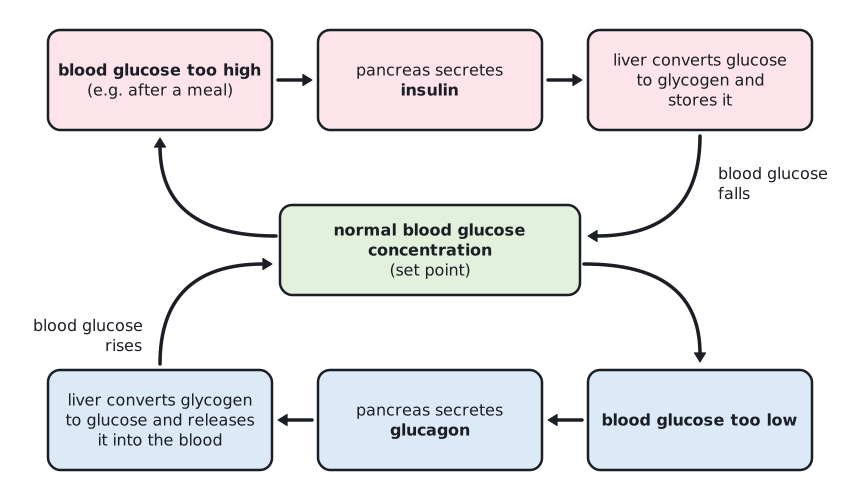 (opens full size in a new tab)
Supplement (what this means)
Supplement: only for the Extended papers (2 and 4). Core students can skip it. What the labels meanInsulin and glucagon are hormones. Glycogen is the storage carbohydrate. Do not mix up the three names.
Written and checked against the Cambridge IGCSE Biology (0610) specification · Updated October 2026