
Breathing in and out (ventilation)Spec 11.1.8
In short
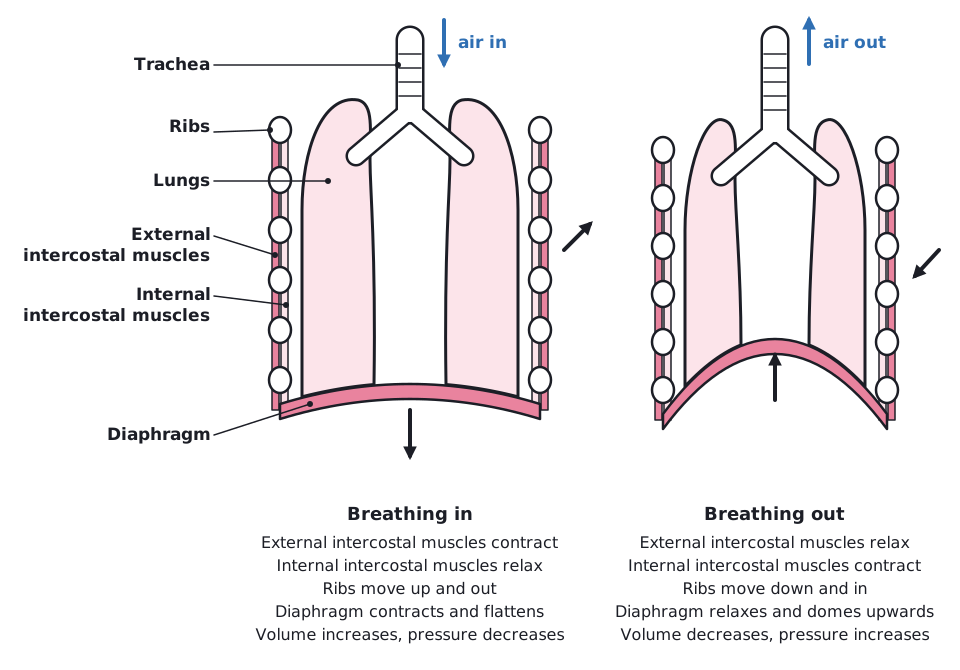
Ventilation is the movement of air into and out of the lungs. When breathing in, the external intercostal muscles contract, the ribs move up and out, and the diaphragm contracts and flattens. The volume of the thorax increases and its pressure falls below the air pressure outside, so air moves into the lungs. Breathing out reverses these changes.
Ventilation moves air into and out of the lungs. The lungs cannot inflate themselves. Air moves because the ribs, the intercostal muscles and the diaphragm change the volume and pressure in the thorax.
Breathing in (inhalation)
- The external intercostal muscles contract and the internal intercostal muscles relax.
- The ribs move upwards and outwards.
- The diaphragm muscles contract, so the diaphragm moves down and flattens.
- The volume of the thorax increases.
- The pressure in the thorax decreases, so it is lower than the air pressure outside.
- Air moves into the lungs from the higher pressure outside.
Breathing out (exhalation)
- The external intercostal muscles relax and the internal intercostal muscles contract (they contract most strongly when you breathe out forcefully).
- The ribs move downwards and inwards.
- The diaphragm muscles relax, so the diaphragm moves up into a dome shape.
- The volume of the thorax decreases.
- The pressure in the thorax increases, so it is higher than the air pressure outside.
- Air is pushed out of the lungs to the lower pressure outside.
| Breathing in | Breathing out | |
|---|---|---|
| External intercostal muscles | Contract | Relax |
| Internal intercostal muscles | Relax | Contract |
| Ribs | Move up and out | Move down and in |
| Diaphragm | Contracts and flattens | Relaxes and domes upwards |
| Volume of thorax | Increases | Decreases |
| Pressure in thorax | Decreases | Increases |
 (opens full size in a new tab)
Do not say that air is sucked in because the lungs expand. The thorax volume increases first, the pressure falls, and then air moves in because the pressure outside is higher.
Give the answer in order: muscle action, rib or diaphragm movement, volume change, pressure change, air movement. Marks are usually awarded for each link.
Written and checked against the Cambridge IGCSE Biology (0610) specification · Updated October 2026