
Continuous and discontinuous variationSpec 18.1.1, 18.1.2, 18.1.3, 18.1.4, 18.1.5
In short
Variation is the differences between individuals of the same species. Continuous variation gives a range of phenotypes between two extremes, such as body length, and is caused by both genes and the environment. Discontinuous variation gives a limited number of phenotypes with no intermediates, such as ABO blood groups, and is usually caused by genes only.
Variation is the differences between individuals of the same species. Two humans, two dogs or two pea plants are never exactly the same.
There are two types of variation: continuous variation and discontinuous variation.
| Continuous variation | Discontinuous variation | |
|---|---|---|
| Phenotypes | A range of phenotypes between two extremes | A limited number of phenotypes with no intermediates |
| Examples | Body length, body mass | ABO blood groups, seed shape in peas, seed colour in peas |
| Caused by | Both genes and the environment | Usually genes only |
| Graph | Histogram (bars touching), often bell-shaped | Bar chart (bars separate) |
Think of height. People can be any height between very short and very tall, so there is a whole range. Blood group is different. You are A, B, AB or O. Nobody is half way between A and B.
The environment affects continuous variation. A plant with the genes to grow tall will still be short if it has too little light or water. Your blood group cannot be changed by diet or exercise.
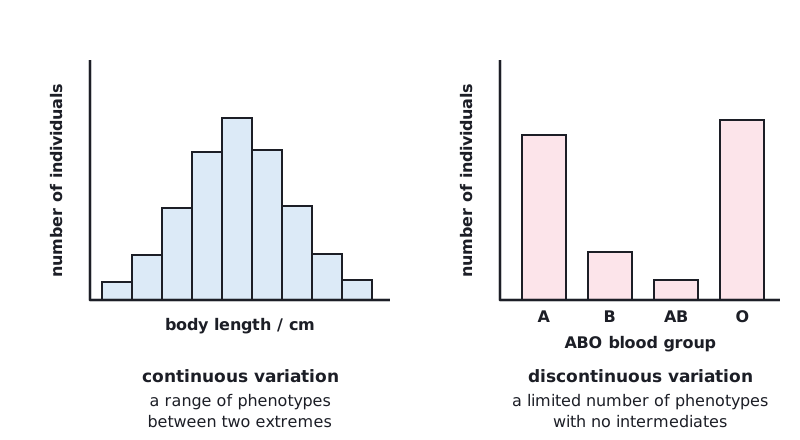 (opens full size in a new tab)
Measure or observe one feature in a large sample (at least 30 individuals of the same species and similar age), for example leaf length to the nearest mm with a ruler, or seed colour. Record the results in a tally table, then plot a histogram for a measured (continuous) feature or a bar chart for categories (discontinuous).
Do not just say 'genes and environment'. Say discontinuous variation is usually caused by genes only, and continuous variation is caused by both genes and the environment.
Written and checked against the Cambridge IGCSE Biology (0610) specification · Updated October 2026